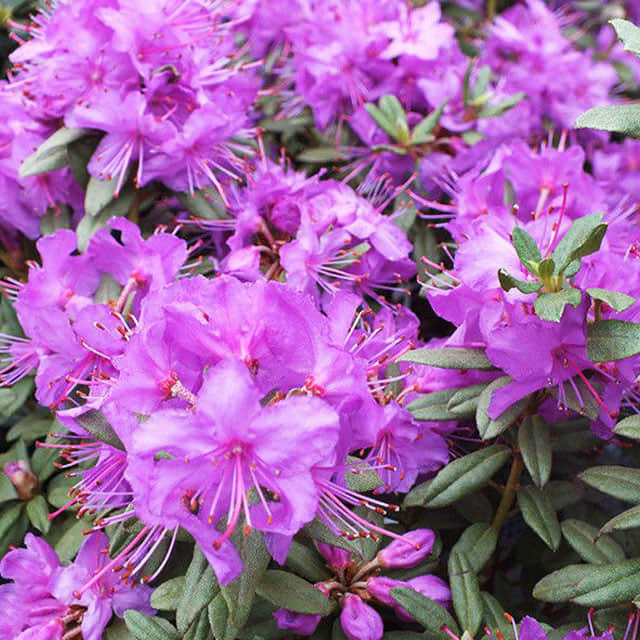
Rhododendron hippophaeoides Yellow Leaves
eco Yellow Leaves

Rhododendron hippophaeoides – Yellow Leaves

Why does your Rhododendron hippophaeoides have yellow leaves? Diagnose the cause and fix it with our step-by-step guide.

search Possible Causes

error

Iron Chlorosis (Nutrient Deficiency)

This species is highly sensitive to soil pH; if the soil is too alkaline, iron becomes chemically locked away from the roots. This manifests as interveinal chlorosis, where leaves turn yellow while veins remain dark green.

Very Common
lightbulb
How to confirm: Check if the new growth shows bright yellow leaves with distinct green vein patterns and test your soil pH for levels above 6.0.
build How to fix it
shopping_cart Recommended Products
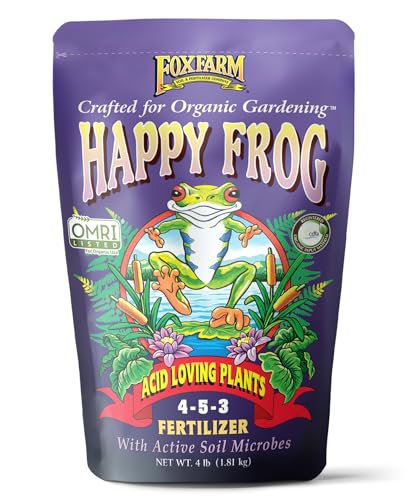
1 Apply an acidifying fertilizer to lower the soil pH and make iron more available to the roots.
2 Supplement with a liquid iron or chelated micronutrient source to provide immediate relief from chlorosis.
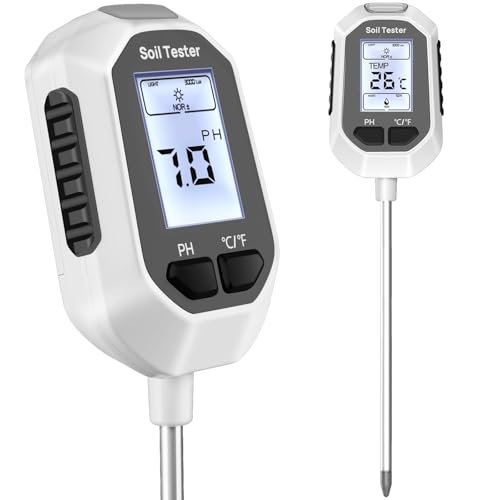
3 Monitor soil acidity levels regularly to ensure the pH remains in the acidic range preferred by Rhododendrons.
error

Root Rot (Phytophthora)

Rhododendron hippophaeoides requires well-draining soil; prolonged saturation leads to oxygen deprivation in the root zone. This prevents water transport, causing a generalized yellowing and eventual wilting of the foliage.

Very Common
lightbulb
How to confirm: Gently lift the edge of the soil near the crown to check if the roots are dark, slimy, or emitting an unpleasant odor.
build How to fix it
shopping_cart Recommended Products
1 Immediately reduce watering frequency and ensure the plant is not sitting in stagnant water to allow the root zone to dry out.
2 Repot the plant in a highly aerated, well-draining medium by mixing existing soil with perlite or horticultural grit to prevent future oxygen deprivation.
3 Prune away any mushy, blackened, or dead roots using sterilized tools to prevent the spread of Phytophthora throughout the root system.
warning

Nitrogen Deficiency

A lack of nitrogen prevents the production of chlorophyll throughout the plant. Unlike iron chlorosis, this usually causes the older, lower leaves to turn uniformly pale yellow before progressing upward.

Common
lightbulb
How to confirm: Observe if the yellowing started on the oldest leaves at the base of the plant and consider applying a nitrogen-rich organic fertilizer.
build How to fix it
shopping_cart Recommended Products
1 Apply a nitrogen-rich organic fertilizer to boost chlorophyll production and green up the foliage.
2 Supplement with a liquid seaweed fertilizer to enhance nutrient uptake and support overall plant vigor.
3 Ensure the soil is well-aerated and use a moisture meter to prevent overwatering, which can lead to nutrient leaching.
warning

Environmental Stress (Drought)

While somewhat hardy, extreme lack of moisture during dry spells can cause the plant to shed chlorophyll to conserve energy. This often results in yellowing leaves that eventually become brittle and drop.

Common
lightbulb
How to confirm: Check the soil moisture depth 2-3 inches below the surface to see if it has become bone dry.
build How to fix it
shopping_cart Recommended Products
1 Check the soil moisture level immediately using a moisture meter to confirm if the drought stress is ongoing.
2 Apply a deep, thorough watering to the root zone to rehydrate the plant, ensuring the soil remains consistently moist but not waterlogged.
3 Apply a liquid seaweed fertilizer to help the plant recover from environmental stress and boost nutrient uptake.

Other Rhododendron hippophaeoides problems

Your plant might also be experiencing one of these issues:

local_hospital All symptoms eco All plants with yellow leaves
favorite