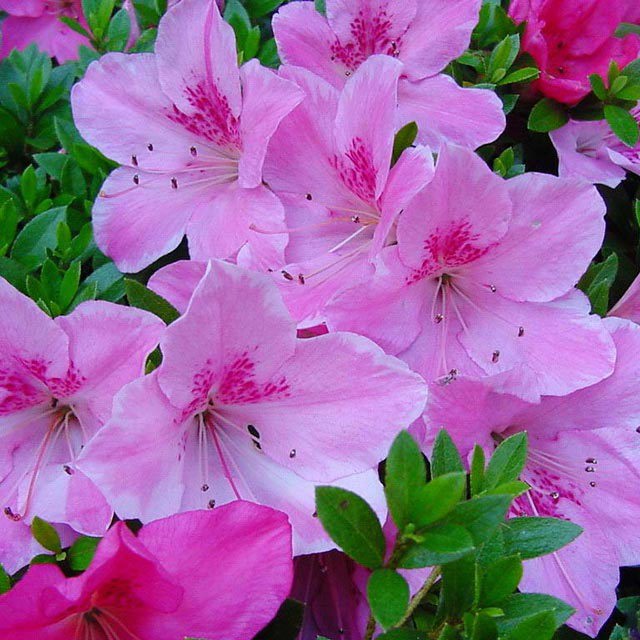
Rhododendron simsii Sudden Leaf Drop
eco Sudden Leaf Drop

Rhododendron simsii – Sudden Leaf Drop

Why does your Rhododendron simsii have sudden leaf drop? Diagnose the cause and fix it with our step-by-step guide.

search Possible Causes

error

Root Rot (Phytophthora)

As an acid-loving plant, Rhododendron simsii is highly susceptible to waterlogged soil which promotes Phytophthora species. This fungal pathogen destroys the fine root hairs, causing the plant to shed leaves rapidly as it can no longer transport water.

Very Common
lightbulb
How to confirm: Gently lift the edge of the topsoil to check if the roots appear dark brown and slimy rather than firm and white.
build How to fix it
shopping_cart Recommended Products
1 Immediately reduce watering frequency and ensure the plant is in a well-draining environment to stop the spread of Phytophthora.
2 Repot the plant in a highly aerated, acidic medium and mix in horticultural perlite to improve drainage and oxygen to the roots.
3 Apply a fungicide treatment to protect remaining healthy tissues from further fungal spread.
error

Environmental Shock (Temperature or Transplant)

Indian Azaleas are sensitive to sudden changes in their microclimate, such as a cold snap or recent movement to a sunnier spot. This physiological stress triggers an immediate abscission of leaves to conserve moisture.

Very Common
lightbulb
How to confirm: Check if there has been a recent change in location, heavy frost, or a significant fluctuation in nighttime temperatures.
build How to fix it
shopping_cart Recommended Products
1 Stabilize the plant's environment by moving it to a sheltered, consistent location away from cold drafts or intense direct sunlight to prevent further temperature fluctuations.
2 Monitor soil moisture levels closely using a moisture meter to ensure the plant remains hydrated but not waterlogged during its recovery period.
3 Apply a specialized acid-loving fertilizer to help the plant recover from the stress of the microclimate change.
warning

Water Stress (Drought)

While they dislike wet feet, Rhododendrons have shallow root systems that dry out quickly. If the substrate becomes desiccated, the plant will drop leaves to reduce transpiration surface area.

Common
lightbulb
How to confirm: Stick your finger two inches into the soil; if it is bone dry and the remaining leaves feel crispy, drought is the likely cause.
build How to fix it
shopping_cart Recommended Products
1 Immediately check the soil moisture level at the root zone to confirm the extent of the drought stress.
2 Deeply water the plant to rehydrate the shallow root system, ensuring the substrate is thoroughly moistened without waterlogging.
3 Apply a specialized fertilizer for acid-loving plants to help the plant recover from the stress and rebuild foliage.
warning

Fungal Leaf Spot (Cylindrocladium)

Certain fungal pathogens target the foliage of R. simsii, particularly in humid conditions with poor airflow. The infection can progress so rapidly that the plant drops entire branches or leaves to mitigate the spread.

Common
lightbulb
How to confirm: Inspect the remaining leaves for small, dark brown or black necrotic spots, often surrounded by a yellowish halo.
build How to fix it
shopping_cart Recommended Products
1 Remove and discard all infected leaves and branches immediately to prevent the fungal spores from spreading to healthy tissue.
2 Apply an organic fungicide to the foliage to control the spread of the pathogen and protect new growth.
3 Improve air circulation around the plant and avoid overhead watering to keep the foliage dry, as high humidity promotes fungal growth.

Other Rhododendron simsii problems

Your plant might also be experiencing one of these issues:

local_hospital All symptoms eco All plants with sudden leaf drop
favorite