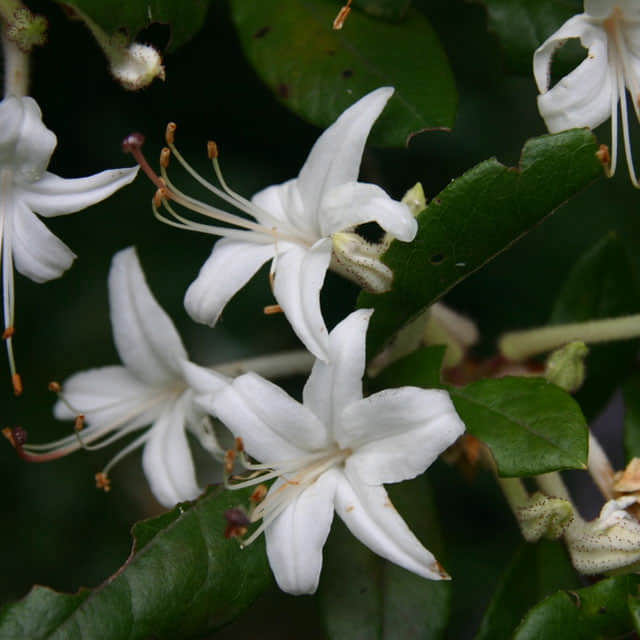
Rhododendron viscosum White Cottony Spots
eco White Cottony Spots

Rhododendron viscosum – White Cottony Spots

Why does your Rhododendron viscosum have white cottony spots? Diagnose the cause and fix it with our step-by-step guide.

search Possible Causes

error

Mealybugs

These small insects secrete a white, waxy, cotton-like substance to protect themselves while feeding on the sap of the Swamp Azalea. They often cluster in the leaf axils or under the foliage where moisture levels are higher.

Very Common
lightbulb
How to confirm: Use a magnifying glass to check for tiny, slow-moving insects hidden deep within the leaf junctions.
build How to fix it
shopping_cart Recommended Products
1 Isolate the plant immediately to prevent the mealybugs from spreading to other greenery and treat the infestation with an organic insecticide spray.
2 Use a cotton swab dipped in isopropyl alcohol to manually remove visible white cottony clusters from leaf axils and stems.
3 Prune away any heavily infested or dead foliage to reduce the pest population and improve airflow around the plant.
error

Woolly Aphids

Similar to mealybugs, woolly aphids produce a white, fluffy wax covering that can make the stems and new growth of the Rhododendron appear coated in cotton. They thrive in the humid microclimates often found around swamp-dwelling plants.

Very Common
lightbulb
How to confirm: Inspect the tender new growth for small, soft-bodied insects covered in white fuzz.
build How to fix it
shopping_cart Recommended Products
1 Apply an organic insecticide spray to the affected stems and new growth to eliminate the woolly aphids and their wax coating.
2 Prune away heavily infested stems to prevent the spread of aphids to other parts of the plant.
3 Increase airflow around the plant by thinning out dense foliage to reduce the humid microclimates that aphids prefer.
warning

Cottony Scale

Certain species of scale insects produce a white, flocculent coating that mimics cotton. As they colonize the plant, they can cause stunted growth and yellowing of the Swamp Azalea leaves.

Common
lightbulb
How to confirm: Gently scrape the white spots with a fingernail to see if there is a hard-shelled insect underneath.
build How to fix it
shopping_cart Recommended Products
1 Apply an organic insecticide spray to the plant to eliminate the scale insects and their white protective coating.
2 Physically remove visible cottony clusters from the stems and leaves using a soft cloth or cotton swab dipped in rubbing alcohol.
3 Monitor the plant's health and ensure it is not under excessive stress, as weakened plants are more susceptible to scale infestations.
warning

Sooty Mold (Secondary Infection)

While the mold itself is black, it often grows on the 'honeydew' left behind by sap-sucking insects. This can create a messy, textured appearance that may look like white/greyish debris before turning dark.

Common
lightbulb
How to confirm: Check if there is a sticky residue on the leaves underneath the white spots.
build How to fix it
shopping_cart Recommended Products
1 Identify and treat the underlying sap-sucking insects (like aphids or scale) that produce the honeydew causing the mold.
2 Gently wash the leaves with a soft cloth or water spray to remove the visible mold and residue from the foliage.
3 Ensure the plant is in an area with good air circulation to prevent moisture buildup that encourages fungal growth.

Other Rhododendron viscosum problems

Your plant might also be experiencing one of these issues:

local_hospital All symptoms eco All plants with white cottony spots
favorite