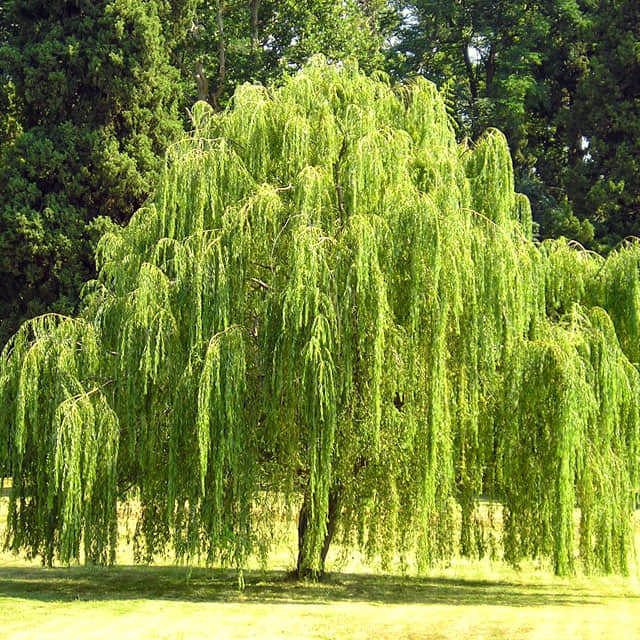
Salix babylonica Drooping Leaves
eco Drooping Leaves

Salix babylonica – Drooping Leaves

Why does your Salix babylonica have drooping leaves? Diagnose the cause and fix it with our step-by-step guide.

search Possible Causes

error

Water Stress (Drought or Waterlogging)

Salix babylonica is a riparian species that requires high moisture levels. Drooping occurs when the soil is too dry to support transpiration, or conversely, if roots are suffocating in anaerobic, waterlogged soil.

Very Common
lightbulb
How to confirm: Check the moisture level 2-3 inches below the soil surface; it should be consistently damp but not muddy.
build How to fix it
shopping_cart Recommended Products
1 Check the soil moisture levels at the root zone using a moisture meter to determine if the plant is suffering from drought or waterlogging.
2 If the soil is bone dry, provide a deep, slow watering to saturate the root zone; if the soil is saturated and muddy, improve drainage or temporarily cease watering to allow the roots to breathe.
3 For long-term moisture management in container-grown willows, consider using a self-watering system to maintain consistent hydration.
warning

Root Rot (Phytophthora)

Excessive soil saturation can lead to fungal pathogens attacking the root system, preventing the willow from transporting water to the canopy. This leads to a characteristic wilting/drooping appearance despite wet soil.

Common
lightbulb
How to confirm: Examine the base of the trunk and roots for dark, mushy tissue or an unpleasant odor.
build How to fix it
shopping_cart Recommended Products
1 Immediately reduce watering frequency and ensure the plant is in a container with excellent drainage to stop further soil saturation.
2 Repot the willow in a well-aerated, high-porosity medium by mixing existing soil with perlite to improve oxygen flow to the roots.
3 Prune away any mushy, blackened, or foul-smelling roots using sterilized shears to prevent the spread of Phytophthora.
warning

Nutrient Deficiency (Nitrogen)

A lack of available nitrogen can impair the tree's ability to maintain cell turgor pressure. This often manifests as drooping accompanied by a general chlorosis (yellowing) of the long, slender leaves.

Common
lightbulb
How to confirm: Look for uniform yellowing across the entire leaf surface, especially on newer growth.
build How to fix it
shopping_cart Recommended Products
1 Apply a nitrogen-rich organic fertilizer to the soil around the base of the tree to restore nutrient levels and support leaf vigor.
2 Monitor the soil moisture levels using a moisture meter to ensure the tree is not experiencing drought stress, which can mimic nitrogen deficiency symptoms.
3 Mulch the base of the tree with organic matter to help retain soil moisture and slowly release nutrients into the root zone.
warning

Temperature Extremes (Heat Stress)

High temperatures can cause the rate of transpiration to exceed the tree's ability to uptake water through its roots. This results in temporary wilting during the hottest parts of the day.

Common
lightbulb
How to confirm: Observe if the leaves recover and perk up during the cooler evening or early morning hours.
build How to fix it
shopping_cart Recommended Products
1 Provide immediate relief by applying a deep, slow soak at the base of the tree during the early morning or late evening to replenish moisture lost to transpiration.
2 Apply a thick layer of organic mulch around the base of the trunk to insulate the root zone and maintain cooler soil temperatures.
3 Monitor soil moisture levels closely using a probe to ensure the root zone remains hydrated without becoming waterlogged during heatwaves.

Other Salix babylonica problems

Your plant might also be experiencing one of these issues:

local_hospital All symptoms eco All plants with drooping leaves
favorite