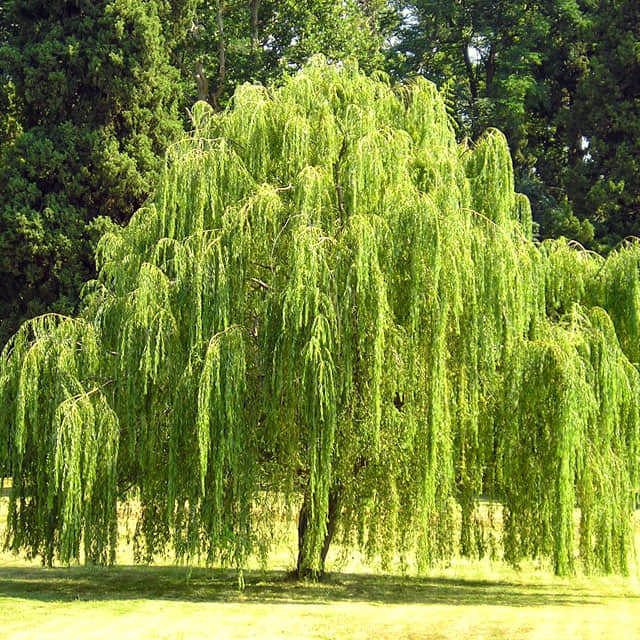
Why does your Salix babylonica have yellow leaves? Diagnose the cause and fix it with our step-by-step guide.
While weeping willows love water, prolonged saturation in heavy clay soil can lead to root hypoxia. This prevents the tree from transporting oxygen and nutrients, causing the long, slender leaves to turn bright yellow.
Nitrogen deficiency typically manifests as a uniform yellowing (chlorosis) across the entire leaf, starting with older foliage. This is common in willow species when soil organic matter is depleted.
Fungal pathogens like Phytophthora can attack the root system of Salix babylonica, especially in waterlogged conditions. As roots decay, the tree loses its ability to support leaf chlorophyll production.
Despite their affinity for moisture, extreme drought can cause the tree to enter a defensive state. This leads to leaf yellowing and eventual premature leaf drop as the tree attempts to conserve water.
Your plant might also be experiencing one of these issues:

 English
 Italiano