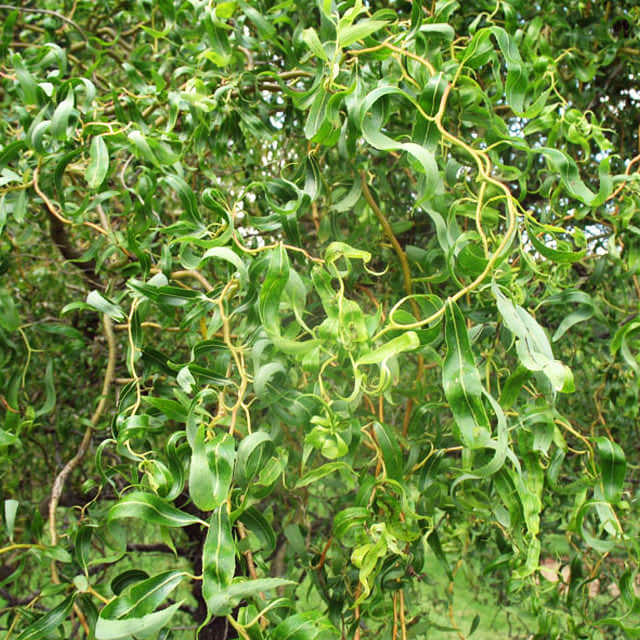
Salix matsudana Drooping Leaves
eco Drooping Leaves

Salix matsudana – Drooping Leaves

Why does your Salix matsudana have drooping leaves? Diagnose the cause and fix it with our step-by-step guide.

pets Pet Friendly

search Possible Causes

error

Water Stress (Drought)

Salix matsudana is a water-loving species; if the soil dries out completely, the tree will rapidly lose turgor pressure in its leaves to prevent transpiration loss.

Very Common
lightbulb
How to confirm: Check the moisture level of the soil several inches below the surface; if it is bone dry, the plant needs immediate deep watering.
build How to fix it
shopping_cart Recommended Products
1 Immediately provide a deep, thorough watering to the base of the tree to restore turgor pressure to the leaves.
2 Monitor the soil moisture levels closely using a moisture meter to ensure the root zone remains consistently damp, as willows are highly water-dependent.
3 Apply a layer of organic mulch around the base of the tree to help retain soil moisture and prevent future drought stress.
error

Root Rot (Phytophthora)

While willows love water, poorly drained or stagnant soil can lead to root decay, which prevents the roots from transporting water upward, causing leaves to wilt even in wet soil.

Very Common
lightbulb
How to confirm: Examine the base of the trunk and the soil for a swampy smell or check if the leaves feel limp despite the soil being saturated.
build How to fix it
shopping_cart Recommended Products
1 Immediately inspect the root system for mushy, dark, or foul-smelling roots and prune away any decayed sections using sterilized tools.
2 Repot the plant in a highly aerated, well-draining medium by mixing existing soil with perlite or horticultural grit to prevent future water stagnation.
3 Ensure the plant is in a container with excellent drainage and use a moisture meter to monitor soil levels, preventing the soil from remaining waterlogged.
warning

Heat Stress

Extreme temperatures can cause high transpiration rates that exceed the tree's ability to pull water from the roots, leading to temporary midday wilting.

Common
lightbulb
How to confirm: Observe if the drooping occurs only during peak sunlight hours and recovers once the temperature drops in the evening.
build How to fix it
shopping_cart Recommended Products
1 Apply a deep, slow watering at the base of the tree during the early morning or late evening to ensure the root zone remains hydrated during peak heat.
2 Apply a layer of organic mulch around the base of the trunk to help regulate soil temperature and reduce moisture evaporation.
3 Monitor soil moisture levels closely using a probe to ensure the tree is not reaching a state of permanent wilting point.
warning

Verticillium Wilt

This soil-borne fungus blocks the xylem vessels of the Salix, physically preventing water from reaching the canopy and causing characteristic drooping or wilting branches.

Common
lightbulb
How to confirm: Look for dark streaks or discoloration in the inner bark or wood of the affected branches when making a small cross-section cut.
build How to fix it
shopping_cart Recommended Products
1 Prune and dispose of heavily wilted or dead branches immediately, ensuring you sterilize your tools with alcohol between cuts to prevent spreading the fungus to healthy tissue.
2 Reduce watering frequency and avoid overhead irrigation to keep the soil from staying excessively damp, which can exacerbate fungal spread.
3 Apply a fungicide treatment if symptoms persist, and ensure the plant is in well-draining soil to prevent the soil-borne pathogen from thriving.

Other Salix matsudana problems

Your plant might also be experiencing one of these issues:

local_hospital All symptoms eco All plants with drooping leaves
favorite