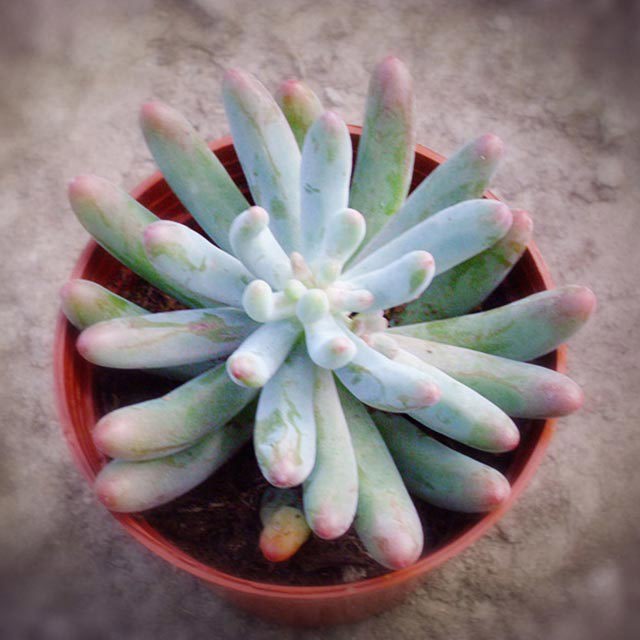
Why does your Sedum corynephyllum have fine webbing? Diagnose the cause and fix it with our step-by-step guide.
This is the most common cause of fine webbing on succulents like Sedum. These microscopic pests thrive in hot, dry conditions and pierce the fleshy leaves to suck out cell contents, leaving behind silk webs and stippled white spots.
While not a direct cause of webbing, high humidity or irregular watering can cause cells to burst, creating micro-fissures in the leaf cuticle. This damage can sometimes trap dust and fine fungal hyphae that mimic a webbed appearance.
While thrips primarily cause silvery scarring, a heavy infestation can lead to secondary fungal growth or silken debris from their movement through the plant's crevices.
Your plant might also be experiencing one of these issues:

 English
 Italiano