Sedum morganianum Fine Webbing
eco Fine Webbing

Sedum morganianum – Fine Webbing

Why does your Sedum morganianum have fine webbing? Diagnose the cause and fix it with our step-by-step guide.

search Possible Causes

error

Two-Spotted Spider Mite Infestation

Spider mites thrive in the warm, dry conditions typical for Sedum morganianum. They pierce the plant's cells to suck out contents, leaving behind fine silk webbing and causing the characteristic yellowing or 'stippling' of the fleshy leaves.

Very Common
lightbulb
How to confirm: Hold a white piece of paper underneath a branch and tap it to see if tiny crawling specks fall off.
build How to fix it
shopping_cart Recommended Products
1 Immediately spray the plant with an organic miticide to kill existing spider mites and their eggs.
2 Increase humidity and reduce heat around the plant, as spider mites thrive in dry, warm environments.
3 Carefully wipe the fleshy leaves with a damp cloth to physically remove webbing and any remaining mites.
warning

Broad Mites

While they do not produce large webs, broad mites can cause fine, distorted growth patterns and leaf curling in succulents. In advanced stages, the accumulation of debris and mite activity can resemble a dusty or web-like texture on new growth.

Common
lightbulb
How to confirm: Examine the very tips of new growth for swelling, puckering, or stunting of the leaves.
build How to fix it
shopping_cart Recommended Products
1 Isolate the plant immediately to prevent the mites from spreading to other succulents and spray the foliage thoroughly with an organic insecticide/miticide.
2 Gently wipe the leaves with a damp cloth to remove the fine webbing and mite debris, then monitor new growth for distortions.
3 Ensure the plant is in a well-ventilated area with adequate light to discourage mite accumulation and promote healthy, firm growth.
warning

Dust and Debris Accumulation

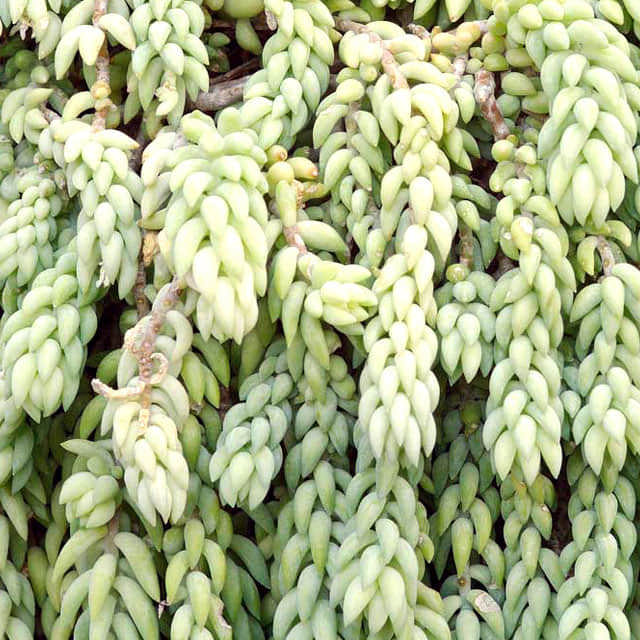
Because Burro's Tail has many tightly packed, overlapping leaves, fine dust or cobweb-like debris from the environment can easily become trapped in the crevices. This is not a biological pathogen but can mimic the appearance of pest webbing.

Common
lightbulb
How to confirm: Gently wipe a leaf with a damp cloth to see if the 'webbing' disappears without leaving behind tiny insects.
build How to fix it
shopping_cart Recommended Products
1 Gently clean the leaves using a soft, dry paintbrush or a clean makeup brush to carefully remove dust and debris from the tight crevices of the plant.
2 Use a gentle stream of room-temperature water to rinse the plant, ensuring you wash away any trapped particles without dislodging the fleshy leaves.
3 Inspect the plant closely for any actual movement or tiny insects to confirm the webbing is indeed just environmental debris and not spider mites.

Other Sedum morganianum problems

Your plant might also be experiencing one of these issues:

local_hospital All symptoms eco All plants with fine webbing
favorite