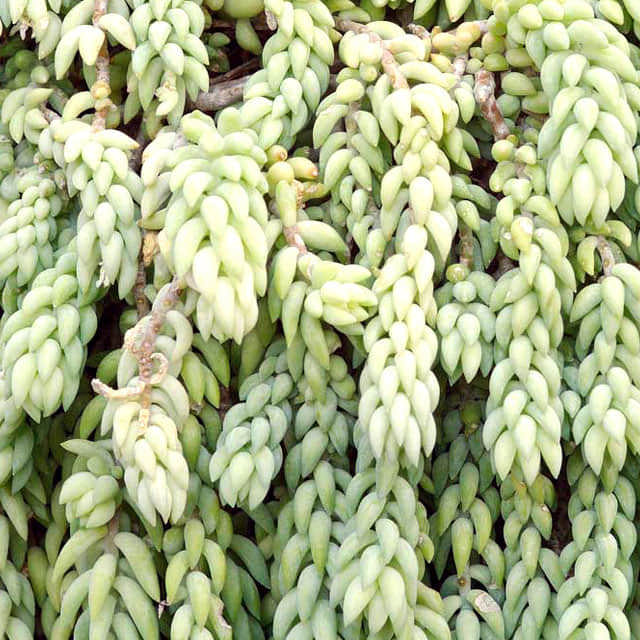
Sedum morganianum Yellow Leaves
eco Yellow Leaves

Sedum morganianum – Yellow Leaves

Why does your Sedum morganianum have yellow leaves? Diagnose the cause and fix it with our step-by-step guide.

search Possible Causes

error

Overwatering and Root Rot

Sedum morganianum is a succulent that requires well-draining soil; excessive moisture causes the roots to suffocate and rot, which manifests as yellowing leaves that often feel mushy.

Very Common
lightbulb
How to confirm: Gently squeeze a stem to see if it feels soft or hollow, and check if the soil remains damp for several days after watering.
build How to fix it
shopping_cart Recommended Products
1 Immediately remove the plant from its current pot and inspect the roots; trim away any mushy, black, or foul-smelling roots using sterilized tools.
2 Repot the plant in a fresh, highly porous substrate designed for succulents to ensure rapid drainage and prevent future rot.
3 Use a moisture meter to monitor the soil, ensuring you only water when the medium is completely dry to the touch.
warning

Nutrient Deficiency (Nitrogen)

A lack of nitrogen in the growing medium can lead to chlorosis, where older leaves turn yellow as the plant mobilizes nutrients to newer growth.

Common
lightbulb
How to confirm: Observe if the yellowing starts on the oldest, bottom-most leaves while new growth remains green.
build How to fix it
shopping_cart Recommended Products
1 Apply a nitrogen-rich organic fertilizer to the soil to replenish essential nutrients and stop the yellowing of older leaves.
2 Check the soil moisture levels with a meter to ensure that the yellowing isn't actually caused by overwatering, which can mimic nitrogen deficiency symptoms.
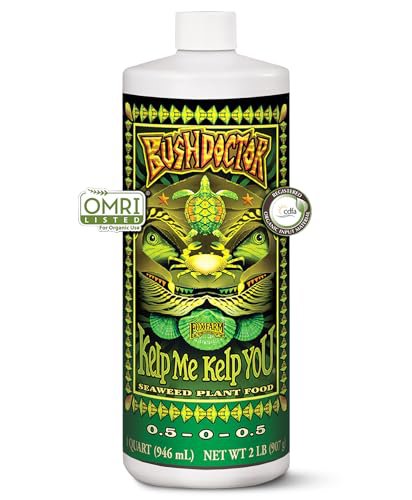
3 Amend the existing potting medium with a nitrogen-rich organic amendment like blood meal to provide a slow-release nutrient boost.
warning

Insufficient Light

While they love sun, extreme light deprivation can cause the plant to lose its characteristic plumpness and turn a pale, yellowish-green as photosynthesis slows down.

Common
lightbulb
How to confirm: Check if the plant is stretching (etiolation) toward a light source or if the leaves are spaced much further apart than usual.
build How to fix it
shopping_cart Recommended Products
1 Move your Sedum to a location with much brighter, indirect light or a spot that receives several hours of direct morning sun to boost photosynthesis.
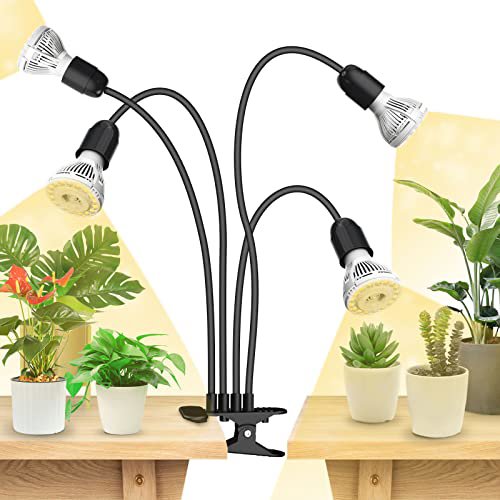
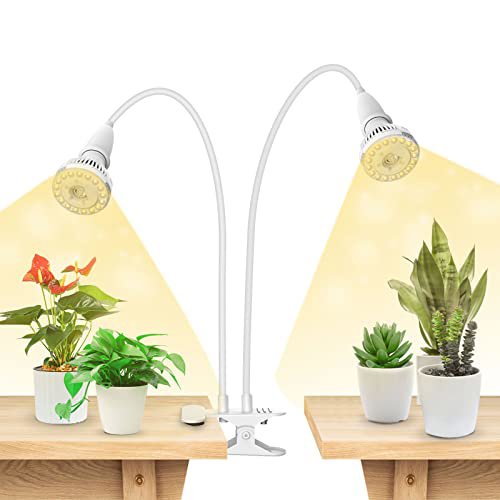
2 Supplement with a full-spectrum grow light if natural light is insufficient, ensuring the light is close enough to maintain the plant's plumpness.
3 Monitor the soil moisture closely, as insufficient light often leads to slower water evaporation and potential root issues.
warning

Temperature Stress

Exposure to sudden cold drafts or temperatures below 40°F (4°C) can shock the metabolic processes of Burro's Tail, causing leaf discoloration.

Common
lightbulb
How to confirm: Check if the plant is located near a drafty window or an air conditioning vent.
build How to fix it
shopping_cart Recommended Products
1 Immediately move your plant away from cold windows, doors, or air conditioning vents to a stable, warm environment above 50°F.
2 Monitor the soil moisture closely, as temperature fluctuations can disrupt evaporation rates; use a moisture meter to ensure the soil isn't staying too wet during the cold period.
3 If the plant shows signs of recovery, apply a light feeding of seaweed fertilizer to help boost metabolic resilience and nutrient uptake.

Other Sedum morganianum problems

Your plant might also be experiencing one of these issues:

local_hospital All symptoms eco All plants with yellow leaves
favorite