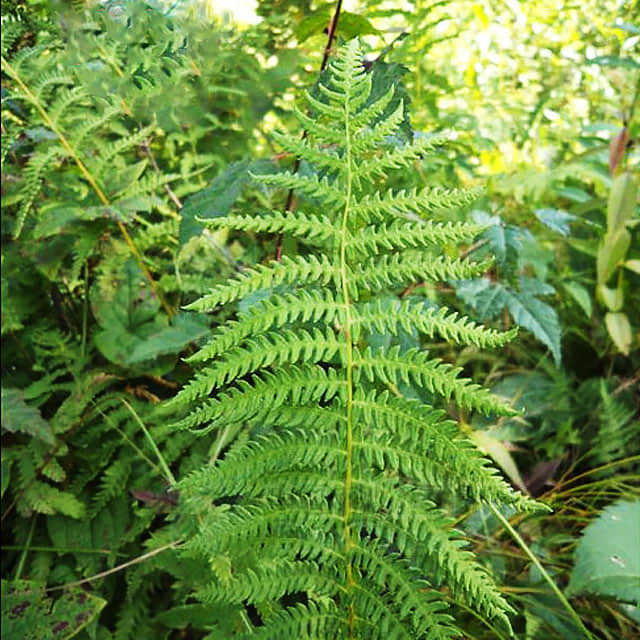
Thelypteris palustris Brown Leaf Tips
eco Brown Leaf Tips

Thelypteris palustris – Brown Leaf Tips

Why does your Thelypteris palustris have brown leaf tips? Diagnose the cause and fix it with our step-by-step guide.

pets Pet Friendly

search Possible Causes

error

Low Humidity / Desiccation

As a marsh species, Thelypteris palustris requires high ambient moisture. When air humidity drops, the delicate frond tips lose water faster than the rhizome can replace it, leading to necrosis.

Very Common
lightbulb
How to confirm: Check if the brown tips coincide with dry indoor heating or low-humidity weather conditions.
build How to fix it
shopping_cart Recommended Products
1 Increase ambient humidity around the fern by using a pebble tray or a humidifier to prevent further moisture loss from the fronds.
2 Mist the plant regularly with a fine spray to maintain moisture levels on the delicate foliage.
3 Monitor soil moisture levels closely to ensure the substrate remains consistently damp, as desiccation often starts when the root zone dries out.
error

Salt Accumulation (Salinity Stress)

In wetland plants, the buildup of mineral salts in the substrate can cause osmotic stress. This prevents water uptake at the furthest extremities of the pinnae, resulting in tip burn.

Very Common
lightbulb
How to confirm: Inspect the soil surface for a white, crusty mineral residue.
build How to fix it
shopping_cart Recommended Products
1 Flush the substrate thoroughly with distilled or rainwater to leach out accumulated mineral salts from the root zone.
2 Monitor soil moisture levels closely to ensure the substrate remains consistently damp without becoming waterlogged, using a moisture meter to prevent future salt buildup.
3 Repot the fern in fresh, high-quality organic potting soil to provide a clean, salt-free growing medium.
error

Inconsistent Soil Moisture

Thelypteris palustris is adapted to saturated soils; even brief periods of drying out can cause cellular collapse at the leaf margins and tips.

Very Common
lightbulb
How to confirm: Monitor the substrate moisture level to ensure it remains consistently damp to wet.
build How to fix it
shopping_cart Recommended Products
1 Ensure the soil remains consistently saturated by monitoring moisture levels closely with a meter to prevent the soil from ever drying out.
2 Transition the plant to a self-watering system or use watering globes to provide a continuous, even supply of moisture to the roots.
3 Repot the fern in a moisture-retentive medium like sphagnum moss to help maintain the high humidity and saturation this species requires.
warning

Nutrient Burn

Excessive application of nitrogen-heavy fertilizers can increase salt concentration in the root zone, causing tip necrosis due to physiological drought.

Common
lightbulb
How to confirm: Review your recent fertilization schedule to see if high doses were applied recently.
build How to fix it
shopping_cart Recommended Products
1 Flush the soil thoroughly with room-temperature water to leach out accumulated mineral salts and reduce the concentration of nitrogen in the root zone.
2 Stop all fertilization for at least 4-6 weeks to allow the plant to recover from the salt stress.
3 When resuming feeding, use a diluted, balanced fertilizer and monitor soil moisture levels with a meter to prevent future salt buildup.

Other Thelypteris palustris problems

Your plant might also be experiencing one of these issues:

local_hospital All symptoms eco All plants with brown leaf tips
favorite