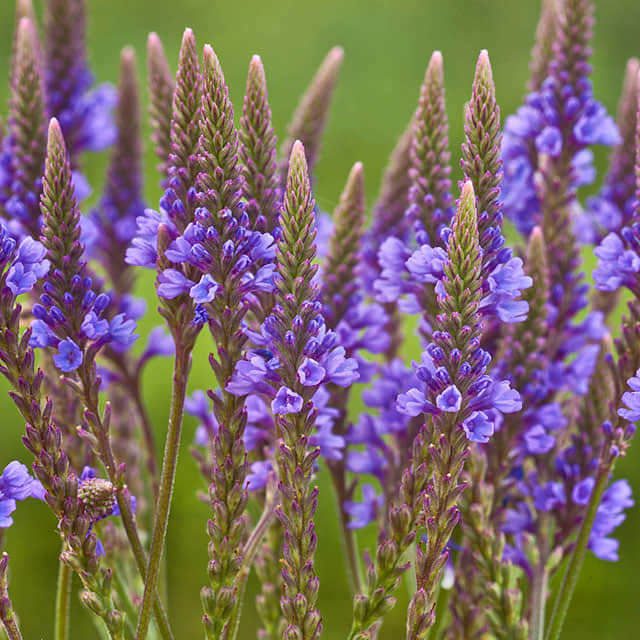
Why does your Verbena hastata have fine webbing? Diagnose the cause and fix it with our step-by-step guide.
Spider mites thrive in warm, dry conditions and feed on the underside of Verbena hastata leaves, extracting cell contents and leaving behind fine silk webs. This often results in stippling (tiny yellow dots) on the foliage before progressing to larger patches of chlorosis.
Other species within the Tetranychidae family create similar silk structures across terminal buds and leaf junctions in Verbena to protect themselves from predators and desiccation. The webbing acts as a micro-environment for the mite colonies.
While primarily known for creating 'serpentine' tracks, some stages of certain insect larvae can cause secondary silk production or structural damage that resembles fine webbing as the plant tissue collapses. This is less common than spider mites but presents alongside visible tunnels in the leaf blade.
Your plant might also be experiencing one of these issues:

 English
 Italiano