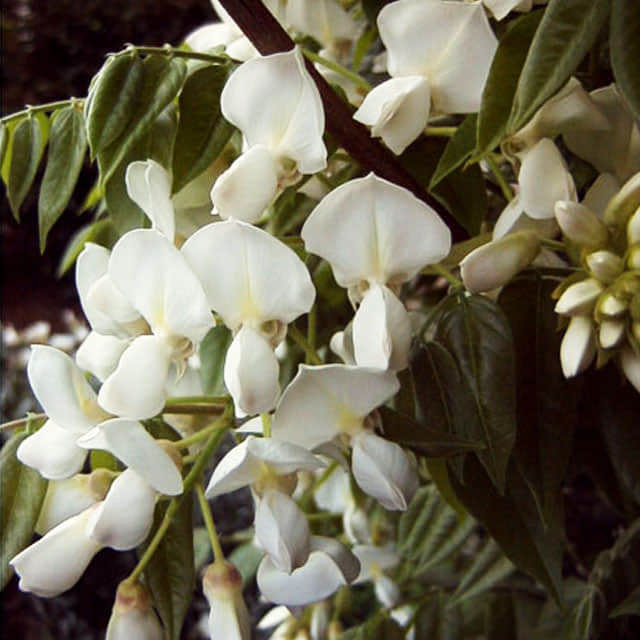
Wisteria venusta Drooping Leaves
eco Drooping Leaves

Wisteria venusta – Drooping Leaves

Why does your Wisteria venusta have drooping leaves? Diagnose the cause and fix it with our step-by-step guide.

search Possible Causes

error

Water Stress (Underwatering or Drought)

As a vigorous climber, Wisteria venusta has high transpiration rates; when soil moisture is insufficient, the plant loses turgor pressure in its large pinnate leaves to conserve water.

Very Common
lightbulb
How to confirm: Stick your finger two inches into the soil to check if it feels dry and brittle.
build How to fix it
shopping_cart Recommended Products
1 Immediately check the soil moisture level at the root zone to confirm the depth of the drought.
2 Deeply water the plant, ensuring the water reaches the entire root ball, and allow the soil to remain consistently moist but not waterlogged.
3 Apply a mulch layer around the base of the plant to help retain soil moisture and reduce evaporation.
error

Root Rot (Overwatering/Poor Drainage)

Excessive moisture in heavy soils leads to anaerobic conditions, suffocating the woody roots of the Wisteria and preventing them from transporting water upward, causing leaves to wilt despite wet soil.

Very Common
lightbulb
How to confirm: Check if the soil is saturated and smell for a sour, fermented odor near the root zone.
build How to fix it
shopping_cart Recommended Products
1 Immediately stop watering and allow the soil to dry out completely to restore oxygen to the root zone.
2 Repot the plant in a well-draining medium by mixing in horticultural perlite to improve aeration and prevent future anaerobic conditions.
3 Inspect the roots for mushy, dark brown decay and prune away any rot using sterilized shears to prevent the spread of infection.
warning

Heat Stress

During extreme summer temperature spikes, Wisteria leaves may droop to reduce the surface area exposed to direct sunlight and minimize moisture loss through stomata.

Common
lightbulb
How to confirm: Observe if the drooping recovers during the cooler evening or early morning hours.
build How to fix it
shopping_cart Recommended Products
1 Provide immediate relief by moving the plant to a shaded area or applying a fine mist to the foliage to lower the leaf temperature.
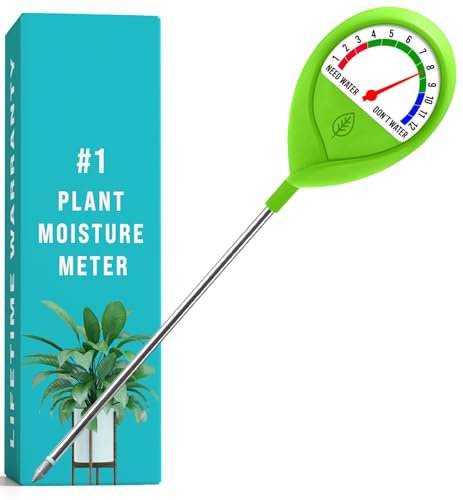
2 Check the soil moisture levels to ensure the plant isn't also suffering from dehydration; use a moisture meter to verify deep soil hydration.
3 Apply a mulch layer around the base of the plant to help regulate soil temperature and reduce evaporation during heat spikes.
warning

Root Disturbance or Transplant Shock

If recently moved, the delicate fine feeder roots of the Wisteria venusta may have been damaged, limiting the plant's ability to support its heavy foliage canopy.

Common
lightbulb
How to confirm: Check if the drooping coincided with recent repotting or significant movement of the vine.
build How to fix it
shopping_cart Recommended Products
1 Apply a microbial-based liquid fertilizer to stimulate rapid root zone development and help the plant recover from transplant stress.
2 Ensure the plant is in a stable environment and avoid further repotting or heavy pruning until new growth appears.
3 Monitor soil moisture levels closely with a moisture meter to prevent overwatering, which can exacerbate root rot in damaged root systems.

Other Wisteria venusta problems

Your plant might also be experiencing one of these issues:

local_hospital All symptoms eco All plants with drooping leaves
favorite