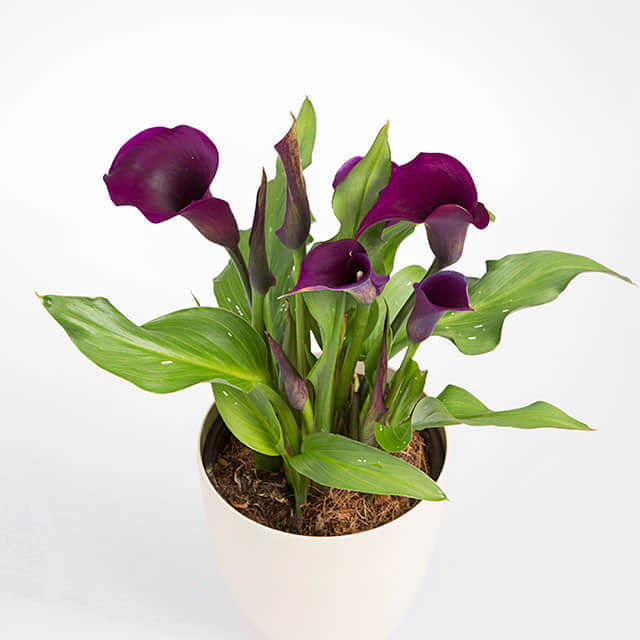
Why does your Zantedeschia aethiopica (Purple) have fine webbing? Diagnose the cause and fix it with our step-by-step guide.
Spider mites thrive in the warm, dry conditions often experienced by Calla Lilies. They pierce the cell walls of the leaves to suck sap, leaving behind characteristic fine silk webbing and stippling patterns.
This specific mite species is highly prevalent in indoor Calla Lily cultivation. As the population grows, the webbing becomes denser, eventually covering the entire plant and causing foliage to turn yellow or bronze.
While not a direct cause of webbing, extremely low humidity can weaken the plant's cuticle, making it more susceptible to mite colonization and causing the plant to produce more silk as a micro-environment.
Your plant might also be experiencing one of these issues:

 English
 Italiano


