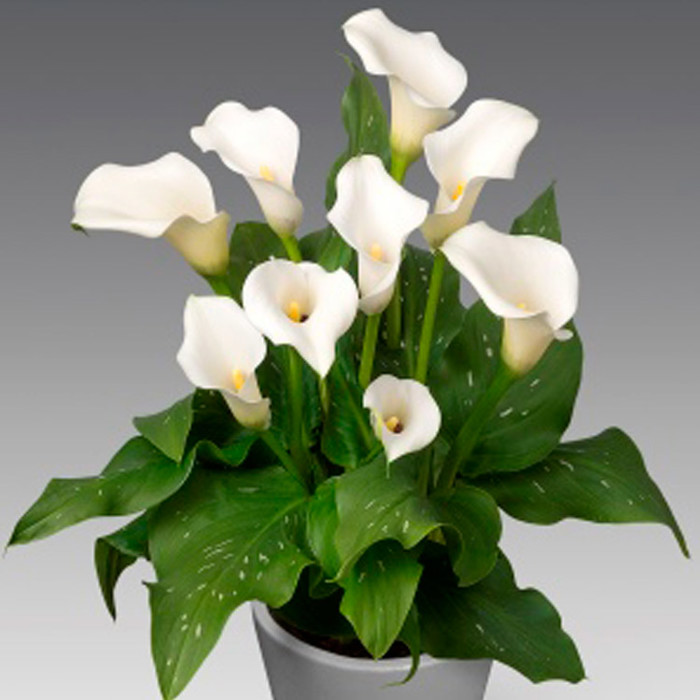
Why does your Zantedeschia Captain Kelso have fine webbing? Diagnose the cause and fix it with our step-by-step guide.
The presence of fine webbing on the foliage of Zantedeschia is a classic sign of spider mites, which thrive in warm, dry conditions. These tiny arachnids pierce plant cells to suck out nutrients, leading to stippling and eventual leaf senescence.
In many indoor or greenhouse environments, specific strains of red spider mites create dense silken webs around the base of the spathe and leaves to protect their eggs. This often occurs when the humidity levels surrounding the Calla Lily drop too low.
While not a direct cause of webbing, extremely dry air can weaken the Zantedeschia's cuticle, making it easier for opportunistic pests to establish webs. This stress often manifests as fine, desiccated strands along leaf edges before full infestation occurs.
Your plant might also be experiencing one of these issues:

 English
 Italiano