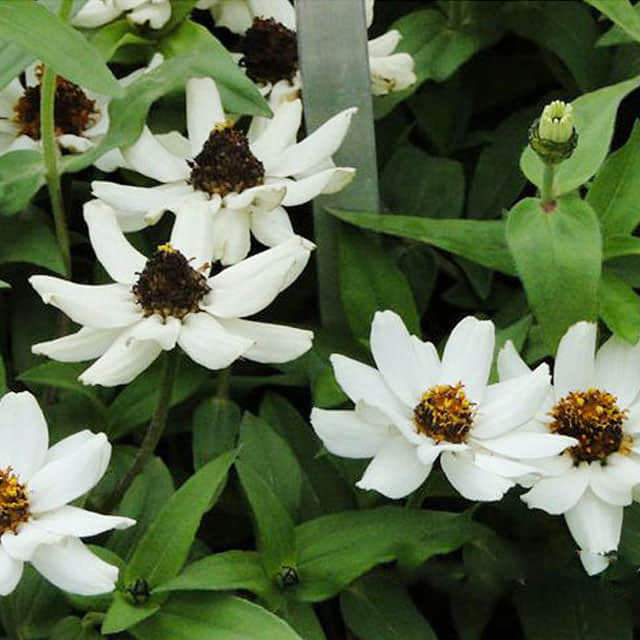
Why does your Zinnia marylandica have yellow leaves? Diagnose the cause and fix it with our step-by-step guide.
Pet FriendlyNitrogen is a mobile nutrient; when lacking, the plant moves it from older leaves to new growth, causing overall chlorosis starting with bottom leaves. In Maryland Zinnias, this often manifests as pale, yellowish foliage before stunted flower development occurs.
Excessive soil moisture deprives roots of oxygen, leading to root suffocation and yellowing. Because Zinnia marylandica prefers well-drained soils, waterlogged conditions quickly trigger leaf chlorosis and potential stem rot.
While typically identified by white spots, early fungal infections can cause leaves to lose their vibrant green color and turn yellow. This is highly common in Zinnia species during humid summer months with poor air circulation.
High soil pH (alkalinity) can prevent Maryland Zinnias from absorbing iron. This results in interveinal chlorosis, where the leaf tissue turns yellow but the veins remain dark green.
Your plant might also be experiencing one of these issues:

 English
 Italiano