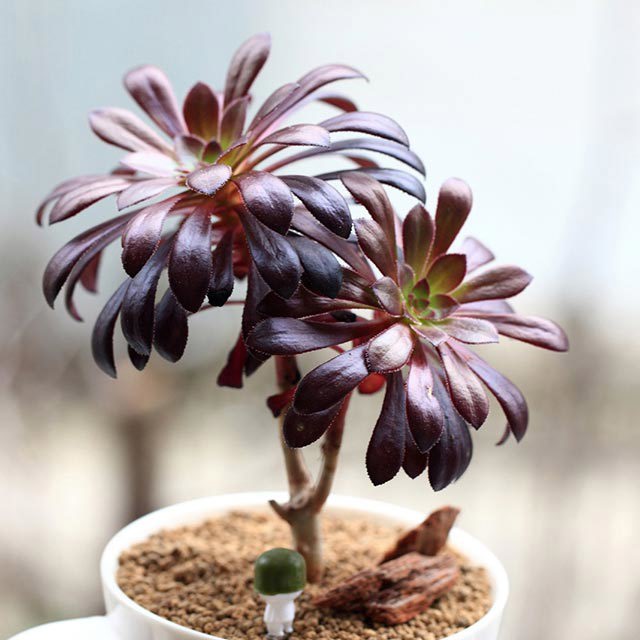
Aeonium arboreum Atropurpureum Brown Leaf Tips
eco Brown Leaf Tips

Aeonium arboreum Atropurpureum – Brown Leaf Tips

Why does your Aeonium arboreum Atropurpureum have brown leaf tips? Diagnose the cause and fix it with our step-by-step guide.

search Possible Causes

error

Low Humidity / Dry Air

Aeoniums are succulent plants that prefer slightly higher humidity than typical desert cacti. In very dry indoor environments, the moisture evaporates from the leaf margins faster than the plant can replace it, causing tip necrosis.

Very Common
lightbulb
How to confirm: Check if the tips are crispy and brittle rather than soft or mushy.
build How to fix it
shopping_cart Recommended Products
1 Increase local humidity around the plant by using a pebble tray or a humidifier to prevent moisture from evaporating too quickly from the leaf margins.
2 Gently mist the foliage with a fine spray to provide immediate surface hydration, but ensure the plant has adequate airflow to prevent rot.
3 Monitor soil moisture levels closely to ensure the plant remains hydrated without becoming waterlogged, as dry air can often lead to deceptive surface-level dryness.
error

Salt Accumulation (Fertilizer Burn)

Excessive buildup of mineral salts from tap water or fertilizers can dehydrate the leaf extremities. As the plant transpires, these salts concentrate at the edges of the leaves in 'Atropurpureum' cultivars, causing browning.

Very Common
lightbulb
How to confirm: Look for a white, crusty residue on the soil surface or the leaf edges.
build How to fix it
shopping_cart Recommended Products
1 Flush the soil thoroughly with distilled or rainwater to leach out accumulated mineral salts from the root zone.
2 Check the current soil moisture levels to ensure you are not overwatering, which can exacerbate salt-induced dehydration.
3 Repot the plant into fresh, well-draining substrate and avoid using high-salt fertilizers for the next growing cycle.
warning

Inconsistent Watering

Allowing the substrate to dry out completely for too long, followed by heavy watering, causes physiological stress. This cycle disrupts the hydraulic pressure within the succulent leaves, leading to localized cell death at the tips.

Common
lightbulb
How to confirm: Monitor your watering schedule to see if the browning coincides with periods of extreme drought.
build How to fix it
shopping_cart Recommended Products
1 Establish a consistent watering schedule by allowing the soil to dry out partially between waterings, rather than letting it become bone-dry.
2 Use a moisture meter to monitor the substrate depth and ensure you are watering only when the top inch of soil is dry to prevent the stress cycle.
3 Ensure your pot has excellent drainage to prevent water from pooling, which can lead to the heavy watering-to-dryness swings described.
warning

Sunscald (Light Stress)

While 'Atropurpureum' requires bright light for its deep purple pigment, sudden exposure to intense, direct midday sun can scorch the leaf edges. This is common when moving a plant from low light directly into a south-facing window.

Common
lightbulb
How to confirm: Check if the brown patches are accompanied by bleached or faded purple coloration.
build How to fix it
shopping_cart Recommended Products
1 Move the plant to a location with bright, indirect light to prevent further scorching of the leaf edges.
2 If the plant is in a high-intensity area, use a grow light to provide consistent, filtered spectrum light without the heat of direct sun.
3 Monitor soil moisture levels closely, as sunscald can often be exacerbated by dry substrate during heat stress.

Other Aeonium arboreum Atropurpureum problems

Your plant might also be experiencing one of these issues:

local_hospital All symptoms eco All plants with brown leaf tips
favorite