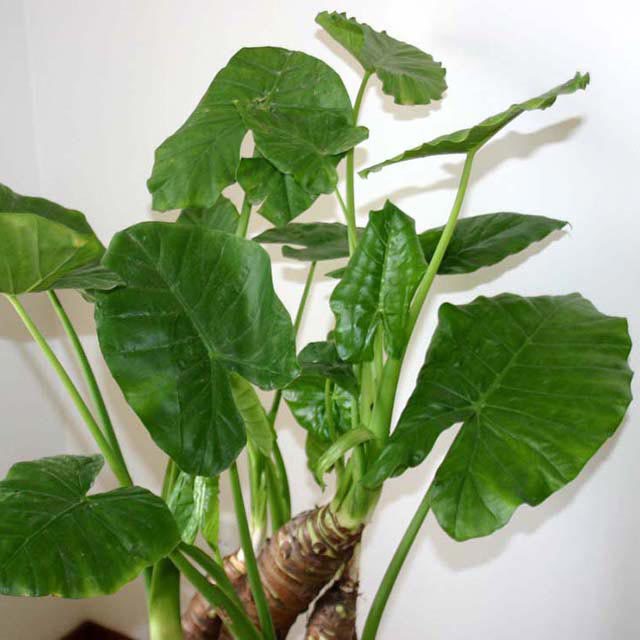
Alocasia macrorrhizos Sudden Leaf Drop
eco Sudden Leaf Drop

Alocasia macrorrhizos – Sudden Leaf Drop

Why does your Alocasia macrorrhizos have sudden leaf drop? Diagnose the cause and fix it with our step-by-step guide.

search Possible Causes

error

Overwatering and Root Rot

Excessive moisture in the substrate leads to anaerobic conditions, causing Phytophthora or Pythium species to attack the roots. As the root system decays, it can no longer support the large leaf structures of the Alocasia, leading to rapid senescence and stem collapse.

Very Common
lightbulb
How to confirm: Gently lift the plant from its pot to check if the roots are brown, slimy, or emit a foul odor.
build How to fix it
shopping_cart Recommended Products
1 Immediately remove the plant from its current pot and trim away any mushy, black, or foul-smelling decayed roots using sterilized shears.
2 Repot the Alocasia in a fresh, highly aerated medium like a mix containing perlite or orchid bark to prevent future anaerobic conditions.
3 Use a soil moisture meter to monitor the substrate, ensuring you only water when the top several inches of soil are completely dry.
error

Temperature Shock

Alocasia macrorrhizos is a tropical species highly sensitive to cold drafts or sudden drops in temperature. Exposure to temperatures below 15°C (60°F) causes the plant to enter a defensive state, shedding leaves to preserve energy for the rhizome.

Very Common
lightbulb
How to confirm: Check if the plant is positioned near a drafty window, air conditioning vent, or unheated door.
build How to fix it
shopping_cart Recommended Products
1 Immediately move the plant to a warm, draft-free location, ensuring temperatures remain consistently above 18°C (65°F).
2 Avoid placing the plant near cold windows, air conditioning vents, or exterior doors to prevent further thermal stress.
3 Monitor soil moisture closely with a meter to ensure the plant is not overwatered while in its dormant, low-energy state.
warning

Low Humidity Stress

While the roots may be hydrated, extremely dry indoor air causes rapid transpiration from the large leaf surface area. This moisture deficit forces the plant to drop older leaves to reduce its overall water requirements.

Common
lightbulb
How to confirm: Use a hygrometer to check if your ambient humidity is consistently below 50-60%.
build How to fix it
shopping_cart Recommended Products
1 Increase local humidity around the plant by using a pebble tray or a humidifier to prevent rapid moisture loss from the large leaves.
2 Mist the foliage regularly with a fine spray to provide immediate surface hydration.
3 Monitor soil moisture levels to ensure the plant remains hydrated without overwatering, as humidity stress often coincides with inconsistent watering.
warning

Nutrient Deficiency (Nitrogen)

A lack of available nitrogen prevents the plant from maintaining chlorophyll levels in its massive leaves. In extreme cases, the plant will sacrifice older, larger leaves to redirect remaining nutrients to new growth.

Common
lightbulb
How to confirm: Observe if the dropping leaves show uniform yellowing starting from the margins or tips before falling.
build How to fix it
shopping_cart Recommended Products
1 Apply a nitrogen-rich liquid fertilizer to boost chlorophyll production and support new foliage growth.
2 Monitor soil moisture levels using a moisture meter to ensure the plant is not experiencing water stress alongside the deficiency.
3 Prune any completely yellowed or dead leaves using sterilized shears to prevent energy waste and potential rot.

Other Alocasia macrorrhizos problems

Your plant might also be experiencing one of these issues:

local_hospital All symptoms eco All plants with sudden leaf drop
favorite