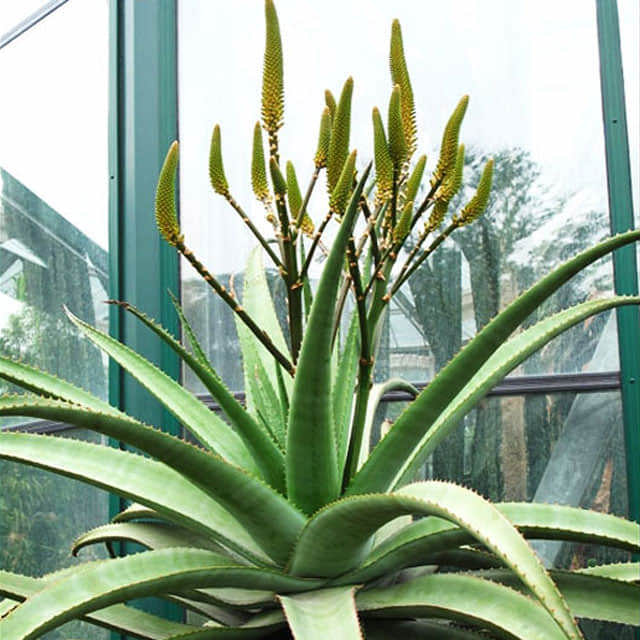
Aloe marlothii Sudden Leaf Drop
eco Sudden Leaf Drop

Aloe marlothii – Sudden Leaf Drop

Why does your Aloe marlothii have sudden leaf drop? Diagnose the cause and fix it with our step-by-step guide.

search Possible Causes

error

Overwatering and Root Rot

Aloe marlothii is a succulent that requires well-draining soil; excessive moisture causes the roots to suffocate and rot, leading to the sudden detachment of lower leaves. As the root system fails, it can no longer support the plant's hydraulic pressure.

Very Common
lightbulb
How to confirm: Check the base of the stem and the roots for any signs of dark, mushy, or foul-smelling tissue.
build How to fix it
shopping_cart Recommended Products
1 Immediately remove the plant from its current container and inspect the roots; discard any mushy, black, or foul-smelling roots using sterilized shears.
2 Repot the Aloe in a fresh, highly porous substrate designed for succulents to ensure rapid drainage and prevent future moisture buildup.
3 Use a moisture meter to monitor the soil regularly, ensuring you only water when the medium is completely dry to the core.
error

Temperature Shock (Frost Damage)

While mature Aloe marlothii can tolerate some cold, a sudden drop below freezing temperatures causes cellular rupture in the leaves. This rapid destruction of cell walls leads to the softening and eventual dropping of affected foliage.

Very Common
lightbulb
How to confirm: Inspect if the dropped leaves exhibit dark, translucent, or water-soaked spots.
build How to fix it
shopping_cart Recommended Products
1 Immediately move the plant to a sheltered, frost-free location or bring it indoors to a stable temperature above 50°F (10°C) to prevent further cellular damage.
2 Prune away any mushy, blackened, or completely dead leaves using sterilized shears to prevent fungal growth and allow the plant to focus energy on new growth.
3 Monitor soil moisture closely with a meter to ensure the plant is not overwatered while in recovery, as frost-damaged roots are highly susceptible to rot.
warning

Nutrient Deficiency (Nitrogen/Potassium)

A prolonged lack of essential macronutrients can cause the plant to undergo senescence, where it sheds older, lower leaves to redirect resources to the new growth at the apex. This is often a gradual process but can appear sudden if soil reserves are depleted.

Common
lightbulb
How to confirm: Look for yellowing (chlorosis) in the older leaves before they eventually drop.
build How to fix it
shopping_cart Recommended Products
1 Apply a balanced liquid fertilizer to replenish essential nitrogen and potassium levels in the soil.
2 Check the soil moisture levels using a moisture meter to ensure the plant is not also experiencing root stress from overwatering.
3 Inspect the remaining leaves for any signs of pests that might be contributing to the leaf drop.
warning

Pest Infestation (Scale or Mealybugs)

Heavy infestations of sap-sucking insects like scale or mealybugs drain the plant's energy and compromise structural integrity. The physiological stress from significant fluid loss can trigger a defensive leaf drop response.

Common
lightbulb
How to confirm: Examine the crevices between leaves and the stem for small, white cottony masses or hard, brown bumps.
build How to fix it
shopping_cart Recommended Products
1 Inspect the undersides of leaves and crevices for white, cottony mealybug clusters or hard, brown scale insects.
2 Apply an organic insecticide spray to the entire plant to eliminate existing pests and prevent further energy loss.
3 Wipe away visible insects with a cotton swab dipped in isopropyl alcohol to reduce the immediate infestation load.

Other Aloe marlothii problems

Your plant might also be experiencing one of these issues:

local_hospital All symptoms eco All plants with sudden leaf drop
favorite