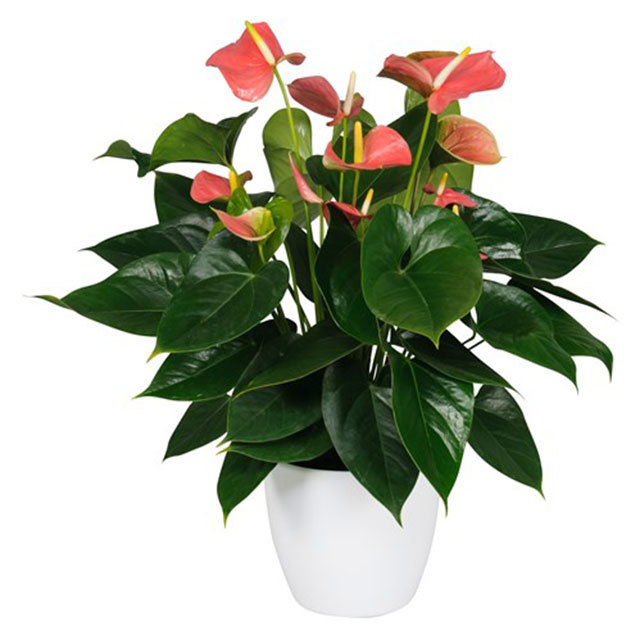
Why does your Anthurium andraeanum Amis have fine webbing? Diagnose the cause and fix it with our step-by-step guide.
These microscopic arachnids thrive in the warm, dry conditions often found with Anthuriums, feeding on the undersides of leaves and injecting saliva that damages cells. The fine webbing is a characteristic defensive/nesting structure created by the mites.
While they do not produce large webs, broad mites can cause plant stress and secondary silk production from other small organisms due to weakened leaf tissue. They often cause characteristic 'cupping' or distortion of the Anthurium foliage.
Anthuriums require high humidity; when air is too dry, the plant's cuticle weakens, making it highly susceptible to opportunistic mite attacks. The webbing is a symptom of the pest, but the root cause is environmental desiccation.
Your plant might also be experiencing one of these issues:

 English
 Italiano