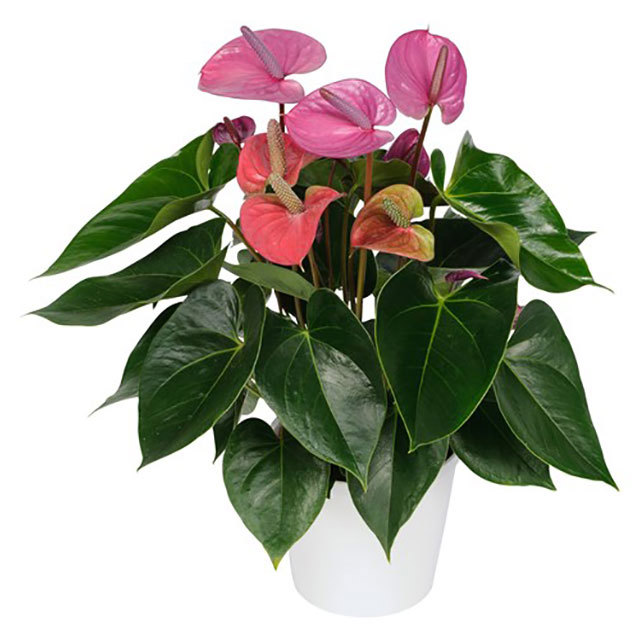
Anthurium andraeanum Cavalli White Cottony Spots
eco White Cottony Spots

Anthurium andraeanum Cavalli – White Cottony Spots

Why does your Anthurium andraeanum Cavalli have white cottony spots? Diagnose the cause and fix it with our step-by-step guide.

search Possible Causes

error

Mealybugs

These small, soft-bodied insects secrete a white, waxy substance to protect themselves, which appears as cottony clumps on stems and leaf axils of Anthuriums. They feed on plant sap, causing yellowing and potential leaf drop.

Very Common
lightbulb
How to confirm: Use a cotton swab dipped in rubbing alcohol to dab the white spots; if they dissolve and turn brown, it is likely mealybugs.
build How to fix it
shopping_cart Recommended Products
1 Isolate the plant immediately to prevent the mealybugs from spreading to your other houseplants.
2 Treat the infestation by spraying the plant with an organic insecticide/miticide to kill the insects and their waxy coating.
3 Use a cotton swab dipped in isopropyl alcohol to manually remove visible white cottony clumps from stems and leaf axils.
warning

Pseudomonas bacteria (Bacterial Soft Rot)

Certain bacterial strains can manifest as white, water-soaked lesions that may appear fuzzy or cottony as the tissue breaks down. This is common in high-humidity environments where airflow is restricted around the Anthurium foliage.

Common
lightbulb
How to confirm: Check if the white spots are accompanied by a soft, mushy texture or a foul odor on the leaves.
build How to fix it
shopping_cart Recommended Products
1 Immediately prune and discard all infected leaves and stems to prevent the bacteria from spreading to healthy tissue.
2 Apply a copper-based fungicide to the affected area to help control bacterial spread and protect remaining healthy foliage.
3 Improve air circulation around the plant and reduce humidity levels to prevent the water-soaked conditions that bacteria thrive in.
warning

Botrytis cinerea (Gray Mold)

In high humidity, this fungus can produce white, fuzzy mycelium on the surface of the spathe or leaves. It thrives in stagnant air and can quickly spread across the Anthurium's fleshy structures.

Common
lightbulb
How to confirm: Inspect if the white fuzz is spreading rapidly across dead or decaying leaf tissue during periods of low ventilation.
build How to fix it
shopping_cart Recommended Products
1 Prune and discard all infected leaves or spathes immediately to prevent the fungus from spreading to healthy tissue.
2 Apply an organic fungicide to the affected areas and surrounding foliage to control the spread of the mold.
3 Improve air circulation around the plant and reduce humidity levels to create an environment less hospitable to Botrytis.

Other Anthurium andraeanum Cavalli problems

Your plant might also be experiencing one of these issues:

local_hospital All symptoms eco All plants with white cottony spots
favorite

