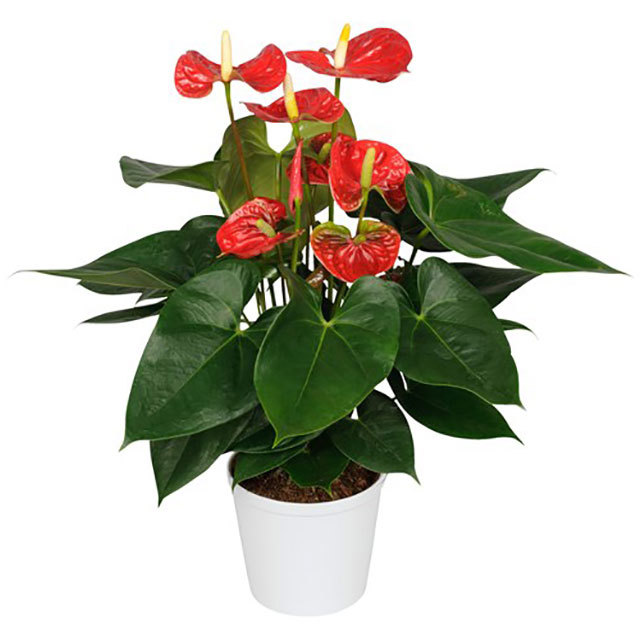
Why does your Anthurium andraeanum Madural have yellow leaves? Diagnose the cause and fix it with our step-by-step guide.
Anthuriums are highly sensitive to stagnant water; excessive moisture in the medium leads to oxygen deprivation in the roots, causing yellowing leaves. This is the most common cause of chlorosis in 'Madural' varieties due to fungal pathogens like Phytophthora.
A lack of essential macronutrients prevents the production of chlorophyll in the large, broad leaves. Nitrogen deficiency typically starts with older leaves turning pale yellow, while magnesium deficiency shows interveinal chlorosis.
Anthuriums are tropical plants that require high humidity; when the air is too dry, the plant may struggle to regulate moisture, leading to leaf yellowing and eventual crisping at the margins. This often occurs in heated indoor environments during winter.
Exposure to temperatures below 15°C (60°F) can shock the metabolic processes of the 'Madural' cultivar, causing the leaves to lose their vibrant green color and turn yellow. Drafts from air conditioning or windows are common culprits.
Your plant might also be experiencing one of these issues:

 English
 Italiano