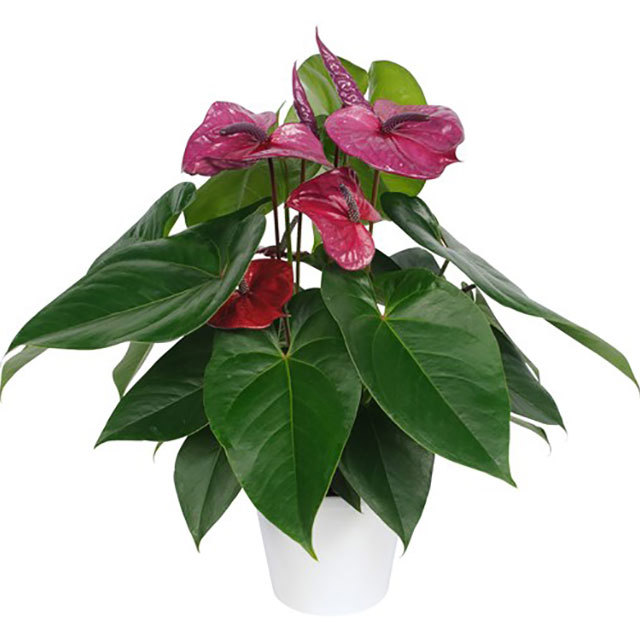
Anthurium andraeanum Utah Yellow Leaves
eco Yellow Leaves

Anthurium andraeanum Utah – Yellow Leaves

Why does your Anthurium andraeanum Utah have yellow leaves? Diagnose the cause and fix it with our step-by-step guide.

search Possible Causes

error

Overwatering and Root Rot

Anthuriums are highly susceptible to moisture-induced stress; excessive water saturates the porous medium, depriving roots of oxygen and leading to fungal decay. This prevents the plant from transporting nutrients, resulting in chlorosis (yellowing) starting with older leaves.

Very Common
lightbulb
How to confirm: Stick your finger two inches into the soil; if it feels saturated or smells musty, you are likely overwatering.
build How to fix it
shopping_cart Recommended Products
1 Immediately stop watering and allow the soil to dry out completely to prevent further root decay.
2 Repot the plant in a fresh, highly aerated medium like a mix containing perlite or orchid bark to restore oxygen to the root zone.
3 Trim away any mushy, black, or foul-smelling roots using sterilized shears to prevent the spread of rot.
error

Nutrient Deficiency (Nitrogen or Magnesium)

As heavy feeders during their growth phase, a lack of nitrogen can cause uniform yellowing of older leaves, while magnesium deficiency often presents as interveinal chlorosis. This is common when the potting medium has become depleted over several months.

Very Common
lightbulb
How to confirm: Check if the yellowing is spreading from the leaf edges or if the veins remain green while the rest of the leaf turns yellow.
build How to fix it
shopping_cart Recommended Products
1 Apply a liquid fertilizer containing magnesium and nitrogen to replenish the depleted potting medium.
2 Check the soil moisture levels with a moisture meter to ensure the yellowing isn't being exacerbated by overwatering.
3 Repot the plant in fresh, nutrient-rich potting soil to provide a long-term source of essential minerals.
warning

Temperature Stress or Cold Drafts

Anthurium andraeanum are tropical plants that require consistent warmth; exposure to temperatures below 60°F (15°C) can cause metabolic disruption. This stress often manifests as yellowing foliage and wilting of the spathe.

Common
lightbulb
How to confirm: Observe if the plant is located near a window, door, or air conditioning vent that delivers cold air directly to the leaves.
build How to fix it
shopping_cart Recommended Products
1 Move your Anthurium to a warmer location away from cold windows, doors, or air conditioning vents to maintain temperatures consistently above 60°F.
2 Monitor the soil moisture closely during temperature fluctuations to ensure the plant is not being overwatered while in a stressed state.
3 If the plant shows signs of recovery, apply a balanced liquid fertilizer to help restore vitality and support new growth.
warning

Improper Light Intensity

While they crave bright light, direct midday sun can scorch the leaves, while excessively low light prevents photosynthesis. In low light, the plant may shed older leaves by turning them yellow to conserve energy for new growth.

Common
lightbulb
How to confirm: Check if the yellowing is accompanied by dark, scorched patches (too much light) or if it only occurs on the lowest leaves (too little light).
build How to fix it
shopping_cart Recommended Products
1 Relocate your Anthurium to a spot with bright, indirect light, avoiding harsh midday sun that can scorch the foliage.
2 If the plant is in a dark corner, supplement its light exposure with a full-spectrum grow light to support photosynthesis.
3 Monitor the soil moisture levels closely, as improper light often disrupts the plant's water uptake and can lead to secondary yellowing.

Other Anthurium andraeanum Utah problems

Your plant might also be experiencing one of these issues:

local_hospital All symptoms eco All plants with yellow leaves
favorite