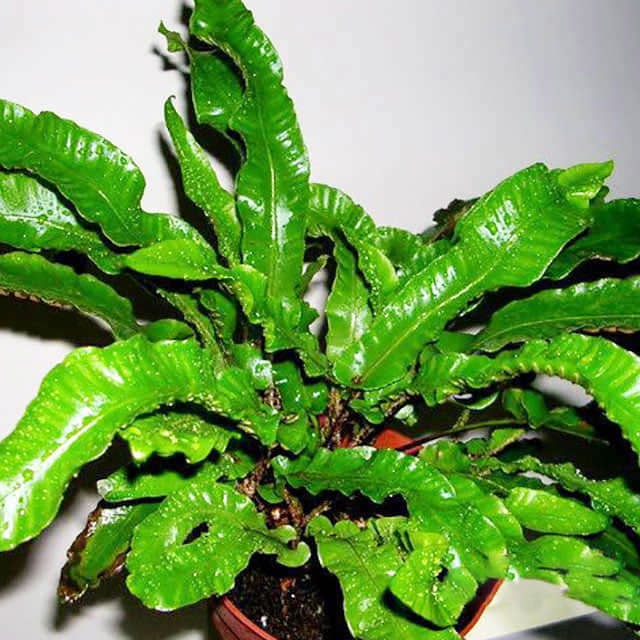
Why does your Asplenium scolopendrium have yellow leaves? Diagnose the cause and fix it with our step-by-step guide.
Pet FriendlyAsplenium scolopendrium thrives in damp environments, but stagnant water in the substrate leads to anaerobic conditions. This suffocates the roots, causing a breakdown in nutrient transport which manifests as chlorosis (yellowing) in the fronds.
This species is native to moist, shaded woodlands and requires high atmospheric humidity. Dry air causes the edges of the fleshy fronds to turn yellow and eventually crisp up as the plant loses moisture faster than it can be replaced.
A lack of available nitrogen prevents the plant from producing sufficient chlorophyll. In Hart's-tongue ferns, this typically presents as a uniform yellowing starting from the older, lower fronds.
While they prefer shade, sudden exposure to direct sunlight can scorch the thick, strap-like leaves. This solar damage causes the chlorophyll to degrade rapidly, resulting in yellow or bleached patches.
Your plant might also be experiencing one of these issues:

 English
 Italiano




