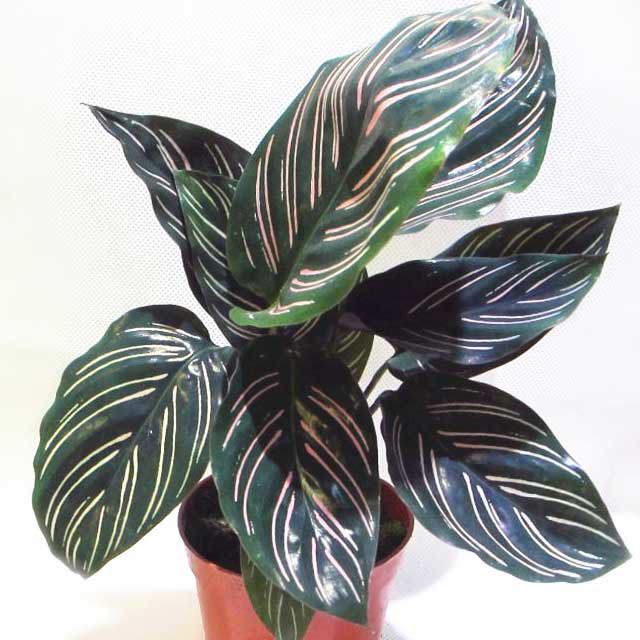
Why does your Calathea sanderiana have yellow leaves? Diagnose the cause and fix it with our step-by-step guide.
Pet FriendlyCalathea sanderiana is a tropical species that requires high ambient humidity. When air is too dry, the plant struggles to maintain turgor pressure, leading to chlorosis (yellowing) and crispy edges.
Excessive moisture in the substrate prevents oxygen from reaching the roots, leading to fungal pathogens like Phytophthora. This disrupts nutrient transport, causing older leaves to turn yellow and eventually drop.
Calatheas are sensitive to fluoride, chlorine, and salts found in tap water. The buildup of these minerals in the leaf tissue causes yellowing and necrotic spotting as cells break down.
A lack of available nitrogen in the potting medium prevents the synthesis of chlorophyll. This typically manifests as a uniform yellowing of older leaves as the plant mobilizes nutrients to new growth.
Your plant might also be experiencing one of these issues:

 English
 Italiano