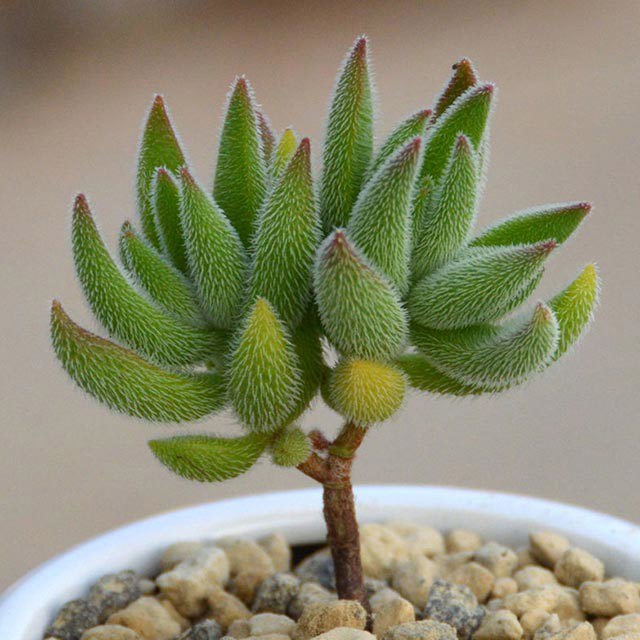
Why does your Crassula mesembrianthoides subsp. hispida have white powder? Diagnose the cause and fix it with our step-by-step guide.
A fungal infection caused by Oomycetes or Ascomycetes that thrives in high humidity and poor air circulation around the hairy leaves of this succulent. The white coating is composed of fungal spores colonizing the leaf surface.
Small, soft-bodied insects that secrete a white, waxy, cottony substance to protect themselves. In Hairy Crassula, they often hide deep within the fine trichomes (hairs) of the plant, making them difficult to spot.
As water evaporates from the surface of the leaves, dissolved calcium and magnesium from tap water can leave a white, crusty residue. This is not biological and does not spread between plants.
In conditions of excessive moisture, Botrytis can manifest as a white, mold-like growth on the fleshy leaves before turning gray. This is common in Crassula species if the substrate remains saturated for too long.
Your plant might also be experiencing one of these issues:

 English
 Italiano