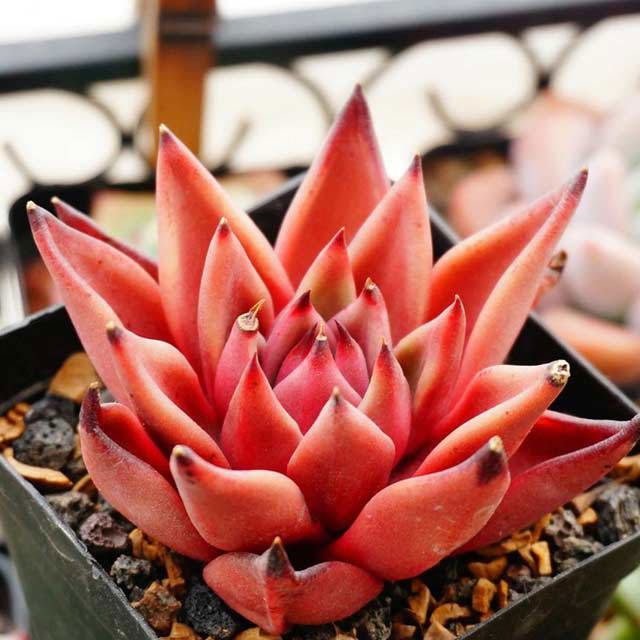
Echeveria agavoides Romeo Brown Leaf Tips
eco Brown Leaf Tips

Echeveria agavoides Romeo – Brown Leaf Tips

Why does your Echeveria agavoides Romeo have brown leaf tips? Diagnose the cause and fix it with our step-by-step guide.

search Possible Causes

error

Low Humidity or Dry Air

Echeveria agavoides prefer moderate humidity; extremely dry indoor air can cause the delicate leaf margins to desiccate and turn brown. This is common when plants are kept near heating vents or in climate-controlled rooms.

Very Common
lightbulb
How to confirm: Check if the tips become brittle and crispy, especially during winter months or when using indoor heating.
build How to fix it
shopping_cart Recommended Products
1 Increase local humidity by placing the plant on a pebble tray filled with water or using a humidifier nearby.
2 Move the plant away from direct heat sources, such as heating vents or radiators, to prevent rapid air desiccation.
3 Gently mist the surrounding air with a fine mist to provide temporary moisture relief to the foliage.
error

Salt Accumulation (Fertilizer/Water Buildup)

Excessive minerals from tap water or over-fertilizing can lead to salt toxicity, which manifests as burnt-looking brown tips. As the plant transpires, these salts concentrate at the furthest point of the leaf—the tip.

Very Common
lightbulb
How to confirm: Look for a white, crusty residue on the soil surface or the edges of the pot.
build How to fix it
shopping_cart Recommended Products
1 Flush the soil thoroughly with distilled or rainwater to leach out accumulated mineral salts and prevent further tip burn.
2 Prune away the most severely burnt leaves using sterilized shears to prevent the spread of necrotic tissue.
3 Monitor soil moisture levels closely to ensure you are not overwatering, which can exacerbate salt concentration.
warning

Sunscald (Solar Radiation Stress)

While 'Romeo' loves bright light, sudden exposure to intense, direct midday sun can scorch the leaf extremities. This causes localized tissue death that appears as dark brown or tan patches at the tips.

Common
lightbulb
How to confirm: Observe if the browning occurred immediately after moving the plant to a brighter window or a more exposed location.
build How to fix it
shopping_cart Recommended Products
1 Immediately move the plant to a location with bright, filtered light or dappled shade to prevent further tissue damage from direct midday sun.
2 Monitor the plant's light exposure during the hottest parts of the day, ensuring it receives sufficient brightness without the intensity of direct solar radiation.
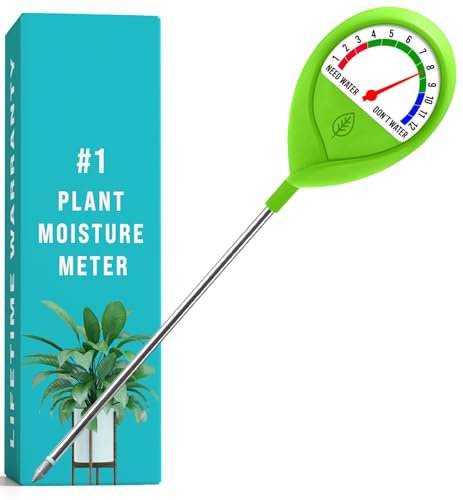
3 Use a moisture meter to ensure the soil remains appropriately dry between waterings, as sunscalded plants can be more sensitive to moisture fluctuations.
warning

Inconsistent Watering Cycles

Allowing the soil to go bone-dry for extended periods followed by heavy watering causes physiological stress. This fluctuation prevents the plant from maintaining turgor pressure in the furthest leaf tissues.

Common
lightbulb
How to confirm: Monitor the soil moisture depth; if the tips brown when the soil is extremely desiccated, watering frequency needs adjustment.
build How to fix it
shopping_cart Recommended Products
1 Establish a consistent watering schedule by allowing the soil to dry out significantly between waterings, but avoid letting it remain bone-dry for too long.
2 Use a moisture meter to monitor the soil depth and ensure you are watering only when the substrate is dry to the appropriate level.
3 Ensure your pot has excellent drainage to prevent water from pooling, which can exacerbate stress during heavy watering cycles.

Other Echeveria agavoides Romeo problems

Your plant might also be experiencing one of these issues:

local_hospital All symptoms eco All plants with brown leaf tips
favorite