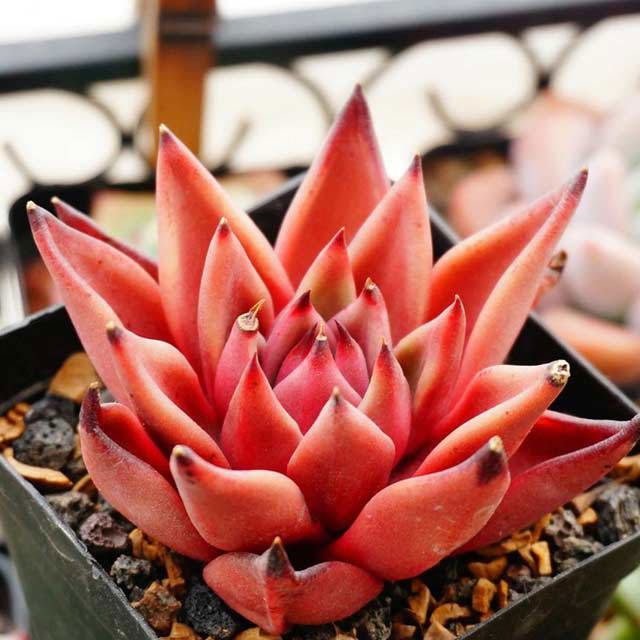
Echeveria agavoides Romeo White Cottony Spots
eco White Cottony Spots

Echeveria agavoides Romeo – White Cottony Spots

Why does your Echeveria agavoides Romeo have white cottony spots? Diagnose the cause and fix it with our step-by-step guide.

search Possible Causes

error

Mealybugs

These tiny insects secrete a white, waxy, cotton-like substance to protect themselves while feeding on the sap of the Echeveria. They often congregate in the tight crevices between the fleshy leaves of 'Romeo'.

Very Common
lightbulb
How to confirm: Use a cotton swab dipped in rubbing alcohol to dab the white spots; if they dissolve and turn brown, it is mealybugs.
build How to fix it
shopping_cart Recommended Products
1 Isolate the plant immediately to prevent the mealybugs from spreading to other houseplants.
2 Apply an organic insecticide spray to the plant, ensuring you target the tight crevices between the leaves where the white cottony masses reside.
3 Use a cotton swab dipped in isopropyl alcohol to manually remove visible mealybug clusters from the leaf bases.
warning

Powdery Mildew

A fungal pathogen that manifests as a white, flour-like coating on the leaf surfaces, often occurring in humid environments with poor airflow. While less common in succulents than in leafy plants, it can thrive if 'Romeo' is kept in stagnant air.

Common
lightbulb
How to confirm: Check if the white spots can be wiped off easily like dust and if they appear more widespread across the leaf surface rather than localized clusters.
build How to fix it
shopping_cart Recommended Products
1 Apply an organic fungicide to the affected leaves to eliminate the fungal spores and prevent further spread.
2 Improve air circulation around the plant by moving it to a spot with better airflow and reducing humidity levels.
3 Prune and discard any heavily infected leaves to prevent the pathogen from colonizing the rest of the Echeveria.
warning

Cottony Blight (Soft Rot precursor)

In the early stages of fungal or bacterial soft rot caused by overwatering, some growers mistake the fuzzy appearance of decomposing organic matter or surface mold for cottony spots. This occurs when the dense rosette of 'Romeo' traps moisture at the base.

Common
lightbulb
How to confirm: Press the area near the white spots; if the leaf tissue feels mushy or smells unpleasant, it is likely a rot issue rather than an insect infestation.
build How to fix it
shopping_cart Recommended Products
1 Immediately remove any mushy or decaying leaves at the base of the rosette to prevent the rot from spreading to the core.
2 Repot the Echeveria in a well-draining substrate amended with perlite to improve aeration and prevent moisture trapping.
3 Monitor soil moisture levels closely using a moisture meter to ensure the plant is only watered when the soil is completely dry.

Other Echeveria agavoides Romeo problems

Your plant might also be experiencing one of these issues:

local_hospital All symptoms eco All plants with white cottony spots
favorite