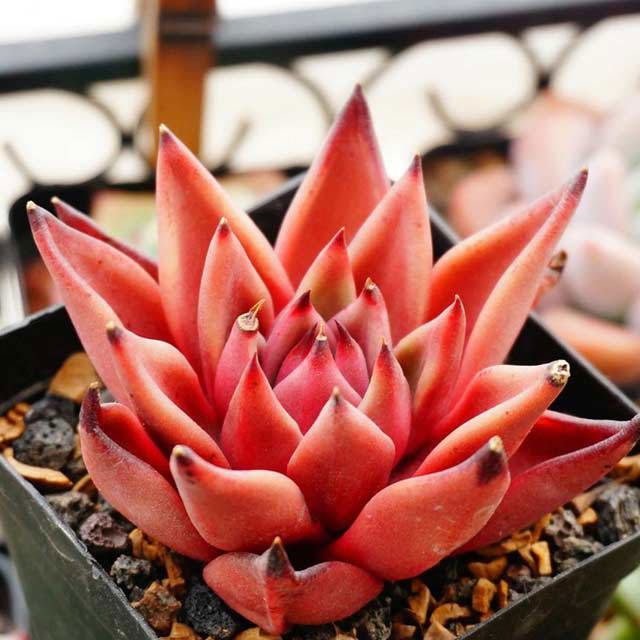
Echeveria agavoides Romeo Yellow Leaves
eco Yellow Leaves

Echeveria agavoides Romeo – Yellow Leaves

Why does your Echeveria agavoides Romeo have yellow leaves? Diagnose the cause and fix it with our step-by-step guide.

search Possible Causes

error

Overwatering and Root Rot

Excessive moisture in the substrate causes the roots of 'Romeo' to suffocate, leading to yellowing leaves starting from the bottom. This is the most common cause for succulents as it triggers fungal decay in the root system.

Very Common
lightbulb
How to confirm: Gently lift the plant from its pot to check if the roots are brown, slimy, or have a foul odor.
build How to fix it
shopping_cart Recommended Products
1 Immediately remove the plant from its current pot and inspect the roots for any mushy, black, or foul-smelling decay; trim away all damaged roots using sterilized tools.
2 Repot the Echeveria in a fresh, well-draining succulent substrate and use a container with excellent drainage, such as a Root & Vessel cylinder pot, to prevent future water pooling.
3 Amend the new soil with horticultural perlite to increase aeration and use a moisture meter to ensure you only water when the substrate is completely dry.
warning

Nutrient Deficiency (Nitrogen)

A lack of nitrogen prevents the plant from producing chlorophyll, causing the characteristic deep red/burgundy tones of 'Romeo' to fade into a pale yellow. This typically manifests as uniform yellowing across older leaves.

Common
lightbulb
How to confirm: Check if you have used a balanced fertilizer in the last 6 months and observe if new growth is significantly smaller than old growth.
build How to fix it
shopping_cart Recommended Products
1 Apply a nitrogen-rich organic fertilizer to restore chlorophyll production and bring back the deep burgundy tones.
2 Monitor soil moisture levels with a moisture meter to ensure nitrogen uptake isn't being hindered by overwatering.
3 Ensure the plant is receiving adequate sunlight, as insufficient light can exacerbate the appearance of nutrient-related yellowing.
warning

Sunburn/Photo-oxidation

While 'Romeo' loves bright light, sudden exposure to intense, direct midday sun can bleach the pigments in the leaves. This causes the edges or specific patches of the fleshy leaves to turn yellow or white.

Common
lightbulb
How to confirm: Look for dry, papery, or bleached patches on the parts of the leaves most exposed to the window or light source.
build How to fix it
shopping_cart Recommended Products
1 Immediately move the plant to a location with bright, filtered light or dappled shade to prevent further pigment bleaching.
2 Monitor the soil moisture levels to ensure the plant is not also experiencing stress from overwatering, which can mimic yellowing.
3 Avoid applying high-intensity fertilizers until the plant has stabilized in its new light environment.
warning

Temperature Stress

Extreme fluctuations in temperature, particularly sudden cold drafts, can cause the plant's metabolic processes to stall. This stress often manifests as yellowing or translucent-looking leaves in the rosette.

Common
lightbulb
How to confirm: Monitor if the plant is placed near an air conditioning vent or a drafty window during winter months.
build How to fix it
shopping_cart Recommended Products
1 Move your Echeveria to a stable environment away from cold drafts, windows, or air conditioning vents to prevent further metabolic stalling.
2 Monitor the soil moisture closely using a moisture meter to ensure the plant is not also suffering from overwatering during this period of temperature stress.
3 If the plant shows signs of recovery, apply a light feeding of seaweed fertilizer to help boost nutrient uptake and resilience.

Other Echeveria agavoides Romeo problems

Your plant might also be experiencing one of these issues:

local_hospital All symptoms eco All plants with yellow leaves
favorite