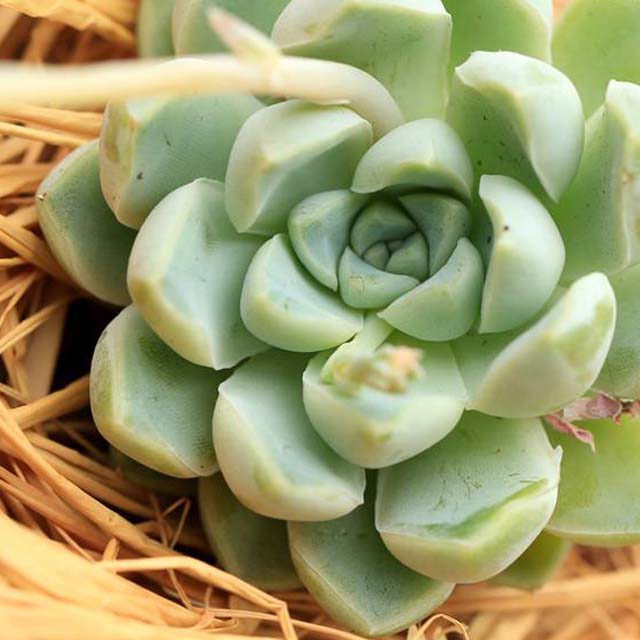
Echeveria elegans kesselringiana Sudden Leaf Drop
eco Sudden Leaf Drop

Echeveria elegans kesselringiana – Sudden Leaf Drop

Why does your Echeveria elegans kesselringiana have sudden leaf drop? Diagnose the cause and fix it with our step-by-step guide.

pets Pet Friendly

search Possible Causes

error

Overwatering and Root Rot

Excessive moisture in the substrate causes the roots of Echeveria elegans to suffocate and decay, preventing the plant from supporting its foliage. As the root system fails, the leaves lose their connection to the stem and drop easily.

Very Common
lightbulb
How to confirm: Gently tug a leaf; if it falls off with no resistance and the base of the stem feels mushy, rot is likely present.
build How to fix it
shopping_cart Recommended Products
1 Immediately remove the plant from the wet soil and inspect the roots for any mushy, black, or foul-smelling decay; trim away all damaged roots using sterilized tools.
2 Repot the Echeveria in a fresh, well-draining substrate specifically designed for succulents, incorporating perlite to improve aeration and prevent future waterlogging.
3 Use a moisture meter to monitor the substrate, ensuring you only water when the soil is completely dry to prevent a recurrence of root rot.
error

Temperature Shock or Cold Stress

This species is sensitive to temperatures below 50°F (10°C). Sudden drops in temperature cause the cellular structure of the leaves to collapse, leading to rapid leaf shedding.

Very Common
lightbulb
How to confirm: Check if there was a recent drop in ambient temperature or if the plant was exposed to a cold draft/window pane.
build How to fix it
shopping_cart Recommended Products
1 Immediately move the plant to a warmer, draft-free indoor location where temperatures remain consistently above 50°F (10°C).
2 Monitor the soil moisture closely to ensure the plant is not overwatered while in a stressed state, using a moisture meter to prevent root rot.
3 If the plant shows signs of recovery, provide supplemental warmth using a grow light to stabilize its metabolic processes.
warning

Pest Infestation (Mealybugs or Scale)

Sap-sucking insects like mealybugs cluster at the leaf axils of Echeveria, draining nutrients and weakening the plant's structural integrity. Severe infestations can trigger a stress response resulting in leaf drop.

Common
lightbulb
How to confirm: Inspect the crevices between the leaves for small, white cottony masses or hard, brown bumps.
build How to fix it
shopping_cart Recommended Products
1 Inspect the leaf axils and base of the plant for white, cottony masses (mealybugs) or hard, brown bumps (scale).
2 Apply an organic insecticide spray to the entire plant, ensuring you coat the crevices where pests hide, to eliminate existing insects and larvae.
3 Isolate the Echeveria from other houseplants to prevent the infestation from spreading to healthy plants.
warning

Nutrient Deficiency

A lack of essential micronutrients in well-draining succulent soil can lead to physiological stress. While slower than rot, a chronic deficiency can cause the plant to shed older leaves to conserve energy.

Common
lightbulb
How to confirm: Observe if the remaining leaves show discoloration like yellowing or pale spots alongside the dropping leaves.
build How to fix it
shopping_cart Recommended Products
1 Apply a balanced, diluted liquid fertilizer to provide essential micronutrients and stabilize the plant's energy levels.
2 Ensure the plant is in a well-draining substrate amended with perlite to prevent moisture retention that could exacerbate stress.
3 Monitor soil moisture levels closely using a moisture meter to ensure the plant is not experiencing secondary water stress.

Other Echeveria elegans kesselringiana problems

Your plant might also be experiencing one of these issues:

local_hospital All symptoms eco All plants with sudden leaf drop
favorite