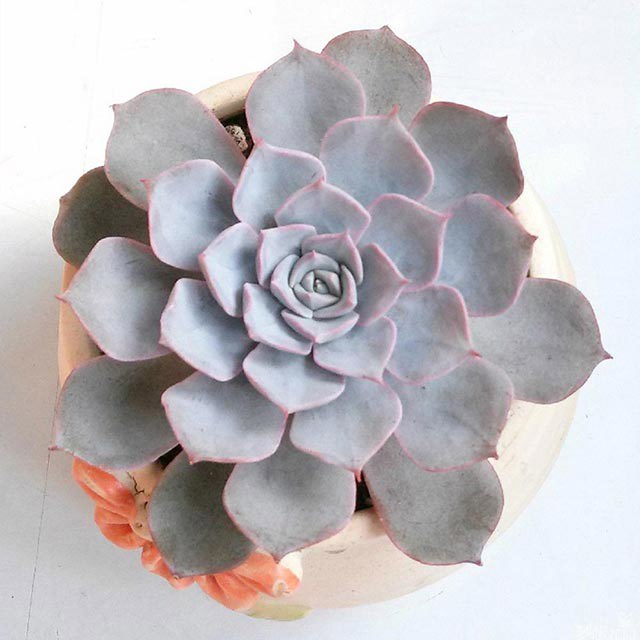
Echeveria peacockii Sudden Leaf Drop
eco Sudden Leaf Drop

Echeveria peacockii – Sudden Leaf Drop

Why does your Echeveria peacockii have sudden leaf drop? Diagnose the cause and fix it with our step-by-step guide.

pets Pet Friendly

search Possible Causes

error

Overwatering and Root Rot

Echeveria peacockii are succulents that store water in their leaves; excessive moisture causes the roots to suffocate and decay, leading to a rapid loss of turgor pressure and leaf abscission.

Very Common
lightbulb
How to confirm: Gently tug on a leaf to see if it detaches easily with a mushy, black base or if the stem feels soft.
build How to fix it
shopping_cart Recommended Products
1 Immediately remove the plant from its current container and inspect the roots for any mushy, black, or foul-smelling decay.
2 Prune away all dead or rotting roots using sterilized tools and repot the Echeveria in a well-draining, gritty succulent mix containing perlite for aeration.
3 Ensure the new pot has excellent drainage and use a moisture meter to monitor the soil, allowing it to dry out completely before the next watering.
error

Temperature Shock/Frost Damage

This species is sensitive to temperatures below 40°F (4°C); sudden exposure to cold air causes cell walls to rupture, resulting in translucent leaves that drop quickly.

Very Common
lightbulb
How to confirm: Check if the fallen leaves appear translucent, water-soaked, or have dark, mushy spots.
build How to fix it
shopping_cart Recommended Products
1 Immediately move the plant to a warm, draft-free indoor location with temperatures consistently above 50°F to prevent further cell damage.
2 Inspect the remaining leaves for mushiness; if the plant is in a pot, ensure it is in a well-draining medium like a succulent mix containing perlite to prevent rot in the stressed state.
3 Avoid fertilizing or heavy watering until the plant shows signs of new, firm growth, as the plant is currently in a state of shock.
warning

Pest Infestation (Mealybugs)

Soft-bodied insects like mealybugs feed on the sap of Echeveria, weakening the plant's ability to hold leaves and causing them to drop due to stress.

Common
lightbulb
How to confirm: Inspect the leaf axils and the underside of the leaves for small, white, cottony clusters.
build How to fix it
shopping_cart Recommended Products
1 Isolate the plant immediately to prevent the spread of mealybugs to other houseplants and treat the infestation with an organic insecticide.
2 Use a cotton swab dipped in isopropyl alcohol to manually remove visible white, cottony mealybug clusters from the leaf axils and crevices.
3 Monitor the soil moisture levels to ensure the plant is not being overwatered, as excess moisture can exacerbate pest-related stress.
warning

Nutrient Deficiency or Soil Depletion

A lack of essential micronutrients in a depleted potting medium can cause the plant to shed older leaves to preserve the growing meristem.

Common
lightbulb
How to confirm: Examine if the leaf drop is occurring only on the oldest, bottom-most leaves while new growth remains stable.
build How to fix it
shopping_cart Recommended Products
1 Inspect the soil moisture levels using a moisture meter to ensure the leaf drop isn't actually caused by overwatering or root rot.
2 Refresh the growing medium with a new, well-draining mix containing perlite to restore essential minerals and improve aeration.
3 Apply a diluted liquid seaweed fertilizer to provide a gentle boost of micronutrients and support stress recovery.

Other Echeveria peacockii problems

Your plant might also be experiencing one of these issues:

local_hospital All symptoms eco All plants with sudden leaf drop
favorite

