Echeveria pulvinata Frosty White Powder
eco White Powder

Echeveria pulvinata Frosty – White Powder

Why does your Echeveria pulvinata Frosty have white powder? Diagnose the cause and fix it with our step-by-step guide.

search Possible Causes

error

Mealybugs

These sap-sucking insects secrete a white, cottony wax to protect themselves, which often accumulates in the crevices between Echeveria leaf rosettes. They feed on the plant's moisture and nutrients, leading to stunted growth or leaf drop.

Very Common
lightbulb
How to confirm: Use a cotton swab dipped in isopropyl alcohol to dab the white spots; if they dissolve and turn brown, it is likely mealybugs.
build How to fix it
shopping_cart Recommended Products
1 Isolate the plant immediately to prevent the spread of mealybugs to other houseplants.
2 Treat the affected areas by spraying the plant with an organic insecticide to eliminate the insects and their protective wax.
3 Use a cotton swab dipped in isopropyl alcohol to manually remove visible white cottony clusters from the leaf crevices.
error

Natural Farina (Epicuticular Wax)

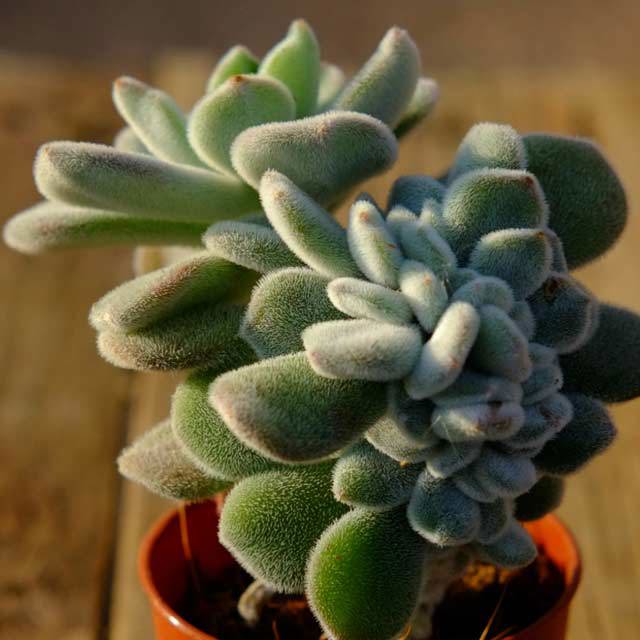
Echeveria pulvinata is known for its 'frosty' appearance, which is caused by a natural coating of fine white wax called farina. This layer is a healthy defense mechanism against UV rays and water loss.

Very Common
lightbulb
How to confirm: Check if the powder is evenly distributed across the leaves; if you rub it off with your finger, the leaf underneath will appear shiny or green.
build How to fix it
shopping_cart Recommended Products
1 Avoid touching or wiping the leaves, as removing the farina can leave permanent fingerprints and expose the plant to sunburn.
2 Use a watering method that avoids getting the leaves wet, such as bottom watering, to preserve the protective wax layer.
3 Monitor soil moisture levels with a meter to ensure you aren't overwatering, which can lead to rot in succulents.
warning

Powdery Mildew

This fungal pathogen manifests as a white, dusty coating on the leaf surfaces, often appearing in humid conditions with poor airflow. Unlike farina, this fungus can be patchy and may eventually lead to necrotic lesions.

Common
lightbulb
How to confirm: Observe if the white patches appear fuzzy or irregular and if they are accompanied by yellowing of the leaf tissue.
build How to fix it
shopping_cart Recommended Products
1 Treat the affected leaves immediately with an organic fungicide to stop the spread of the fungal pathogen.
2 Improve air circulation around the plant and reduce humidity to create an environment less hospitable to powdery mildew.
3 Prune and discard any heavily infected leaves to prevent the spores from spreading to healthy foliage.

Other Echeveria pulvinata Frosty problems

Your plant might also be experiencing one of these issues:

local_hospital All symptoms eco All plants with white powder
favorite