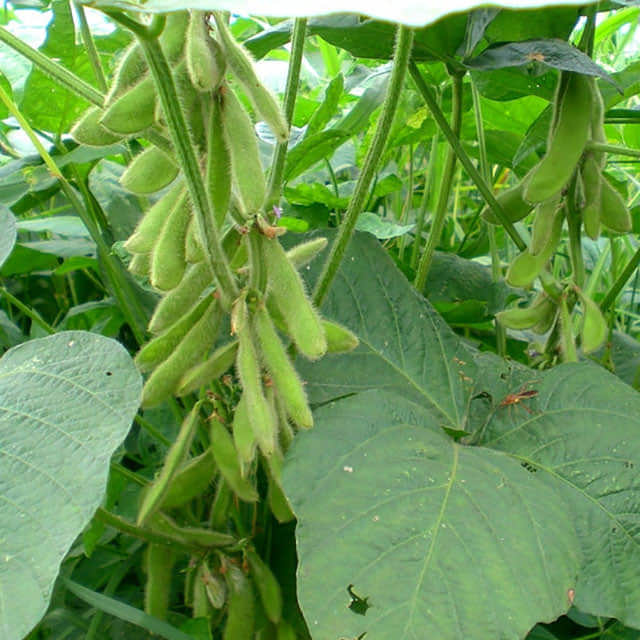
Glycine max White Powder
eco White Powder

Glycine max – White Powder

Why does your Glycine max have white powder? Diagnose the cause and fix it with our step-by-step guide.

pets Pet Friendly

search Possible Causes

error

Soybean White Mold (Sclerotinia sclerotiorum)

This fungal pathogen produces a white, cottony mycelium on the stems and leaves of soybean plants, often leading to stem decay and sclerotia formation.

Very Common
lightbulb
How to confirm: Look for hard, dark brown/black mustard-seed-like structures (sclerotia) buried within the white fuzzy mass.
build How to fix it
shopping_cart Recommended Products
1 Immediately remove and destroy all infected plant material and sclerotia to prevent the fungal spores from spreading to healthy plants.
2 Apply an organic fungicide to control the spread of the white mycelium on remaining healthy tissues.
3 Improve air circulation and reduce humidity around the plant base by thinning dense foliage and avoiding overhead watering.
warning

Powdery Mildew

Various fungal species can cause white, talcum-like patches on the surface of soybean leaves, which can reduce photosynthetic capacity and leaf longevity.

Common
lightbulb
How to confirm: Inspect if the white patches appear as distinct circular spots that spread across the leaf surface without causing stem rot.
build How to fix it
shopping_cart Recommended Products
1 Apply an organic fungicide to the affected leaves to eliminate the fungal spores and prevent further spread.
2 Improve air circulation around the soybean plants by pruning crowded foliage and ensuring they are not too close to other plants.
3 Avoid overhead watering, which can spread fungal spores, and instead water at the base of the plant to keep leaves dry.
warning

Soybean Cyst Nematode (Secondary symptom)

While nematodes don't produce powder, severe infestations cause stunting and chlorosis that can sometimes lead to secondary fungal colonization on decaying tissue.

Common
lightbulb
How to confirm: Check for small, lemon-shaped cysts attached to the roots of the soybean plant.
build How to fix it
shopping_cart Recommended Products
1 Apply a fungicide to treat the secondary fungal colonization and prevent further spread of the white powder on plant tissue.
2 Inspect the root system for characteristic cysts (small, hard bumps) to confirm nematode presence and prevent further infestation in the soil.
3 Improve soil drainage and aeration by incorporating perlite to reduce the moisture levels that favor secondary fungal growth.

Other Glycine max problems

Your plant might also be experiencing one of these issues:

local_hospital All symptoms eco All plants with white powder
favorite


