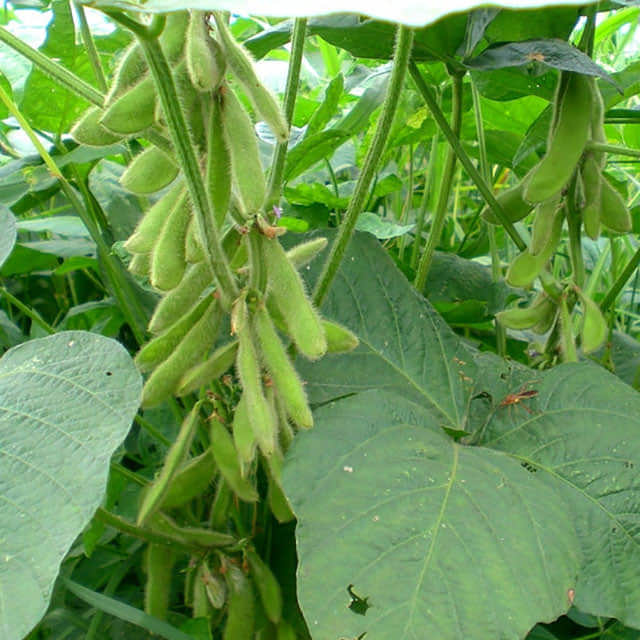
Glycine max Yellow Leaves
eco Yellow Leaves

Glycine max – Yellow Leaves

Why does your Glycine max have yellow leaves? Diagnose the cause and fix it with our step-by-step guide.

pets Pet Friendly

search Possible Causes

error

Nitrogen Deficiency

Nitrogen is highly mobile; when deficient, the plant moves nutrients from older leaves to new growth, causing chlorosis starting at the bottom of the plant. In soybeans, this manifests as a uniform yellowing of older, lower leaves.

Very Common
lightbulb
How to confirm: Check if the yellowing started on the oldest leaves at the base of the stem and move upwards.
build How to fix it
shopping_cart Recommended Products
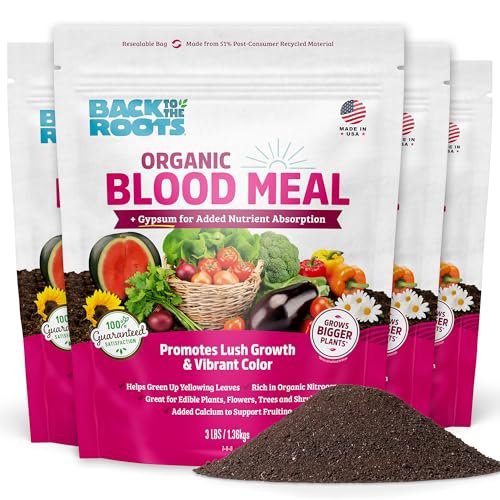
1 Apply a nitrogen-rich organic fertilizer to replenish the soil nutrients and stop the chlorosis from spreading to new growth.
2 Incorporate organic matter like worm castings into the soil to provide a slow-release source of nitrogen and improve soil health.
3 Monitor soil moisture levels using a moisture meter to ensure nitrogen is being effectively transported to the roots without causing waterlogging.
error

Water Stress (Drought or Waterlogging)

Soybeans are sensitive to moisture extremes. Drought causes wilting and yellowing due to stomatal closure, while waterlogged soils cause anaerobic conditions that lead to root rot and nutrient lockout.

Very Common
lightbulb
How to confirm: Inspect the soil moisture level and check for signs of standing water or compacted, muddy soil near the roots.
build How to fix it
shopping_cart Recommended Products
1 Check the soil moisture level at the root zone using a moisture meter to determine if the plant is suffering from drought or waterlogging.
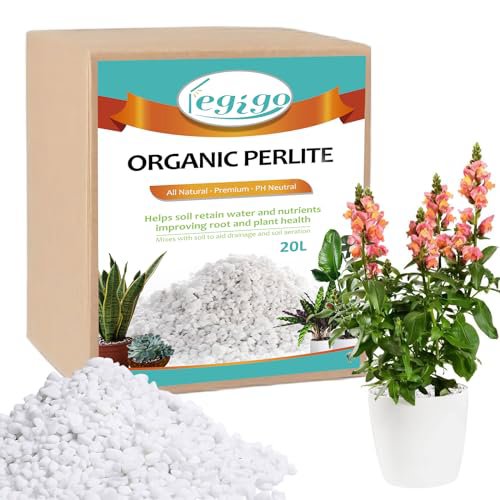
2 If the soil is bone dry, implement a consistent watering schedule; if the soil is saturated, improve drainage by adding horticultural perlite to the soil mix.
3 Apply a liquid seaweed fertilizer to help the plant recover from environmental stress and boost nutrient uptake.
warning

Sulfur Deficiency

Unlike nitrogen deficiency, sulfur deficiency often shows up first in the newer, upper leaves because sulfur is less mobile within the soybean plant. This leads to interveinal chlorosis on top growth.

Common
lightbulb
How to confirm: Observe if the yellowing is appearing on the youngest, topmost leaves of the soybean canopy.
build How to fix it
shopping_cart Recommended Products
1 Apply a sulfur-rich organic soil amendment to the base of the plant to replenish the soil nutrients.
2 Monitor the soil moisture levels using a moisture meter to ensure the sulfur remains available and does not leach away due to overwatering.
warning

Iron Chlorosis (pH Imbalance)

If the soil pH is too high (alkaline), iron becomes unavailable to the soybean roots. This results in bright yellow leaves with distinct green veins (interveinal chlorosis).

Common
lightbulb
How to confirm: Perform a soil test to check if the pH level is above 7.0.
build How to fix it
shopping_cart Recommended Products
1 Test your soil pH immediately to confirm if levels are above 7.0, as high alkalinity is preventing iron uptake.
2 Apply an acidifying soil amendment or a chelated iron supplement to lower the pH and make iron bioavailable to the soybean roots.
3 Ensure the soil has proper drainage to prevent waterlogging, which can also exacerbate nutrient lockout.

Other Glycine max problems

Your plant might also be experiencing one of these issues:

local_hospital All symptoms eco All plants with yellow leaves
favorite