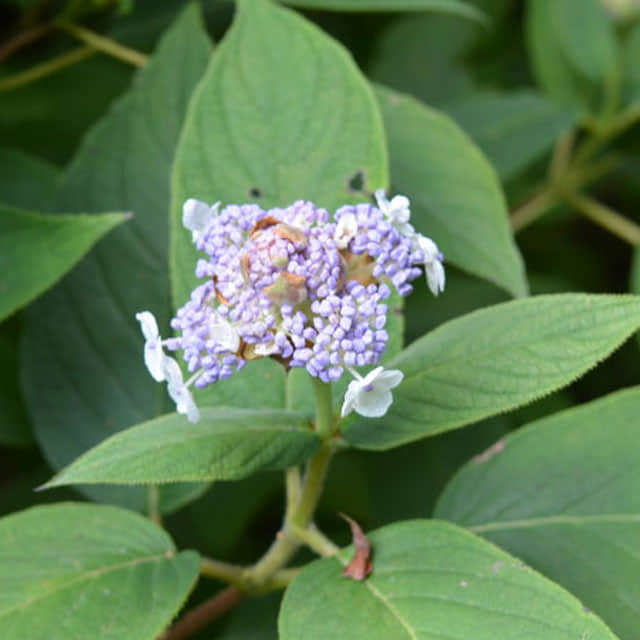
Why does your Hydrangea involucrata have brown leaf tips? Diagnose the cause and fix it with our step-by-step guide.
As a species native to moist, temperate forests, Hydrangea involucrata is highly sensitive to dry air. When ambient humidity drops, transpiration exceeds water uptake, causing the delicate leaf margins to desiccate and turn brown.
Lacecap hydrangeas require consistently moist soil. Allowing the root ball to dry out completely before watering causes hydraulic failure at the leaf extremities, leading to tip necrosis.
Excessive accumulation of mineral salts from fertilizers can draw moisture out of the leaf cells via osmosis. This is particularly common in container-grown Hydrangea involucrata where salts cannot leach away.
While they love moisture, poorly drained soil can lead to anaerobic conditions. If the roots begin to decay due to overwatering, they lose the ability to transport water to the leaf tips, mimicking drought symptoms.
Your plant might also be experiencing one of these issues:

 English
 Italiano