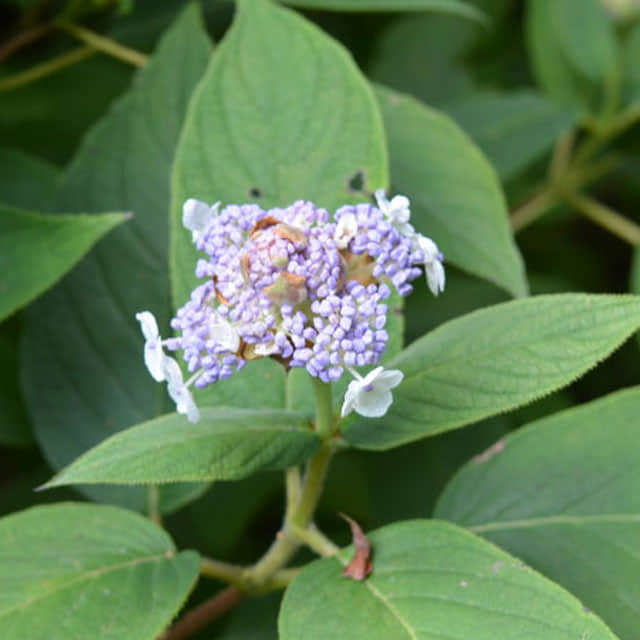
Why does your Hydrangea involucrata have yellow leaves? Diagnose the cause and fix it with our step-by-step guide.
Hydrangea involucrata prefers acidic soil; if the pH is too high (alkaline), the plant cannot absorb iron, leading to interveinal chlorosis where veins stay green but leaf tissue turns yellow.
A lack of nitrogen prevents the production of chlorophyll, causing older leaves to turn uniformly pale yellow before progressing to newer growth.
Both overwatering (causing root hypoxia) and extreme drought stress can disrupt nutrient transport, manifesting as yellowing foliage in lacecap varieties.
While often marked by brown spots, early stages of fungal infections in humid environments can cause localized yellowing (chlorosis) around the lesion sites.
Your plant might also be experiencing one of these issues:

 English
 Italiano