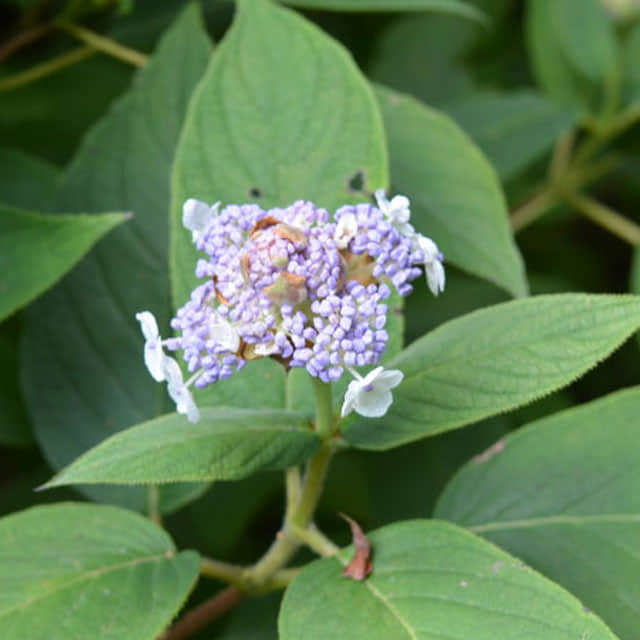
Why does your Hydrangea involucrata have drooping leaves? Diagnose the cause and fix it with our step-by-step guide.
As a species adapted to moist forest understories, Hydrangea involucrata has high transpiration rates. If soil moisture levels drop too low, the plant cannot replace water lost through leaf stomata, leading to rapid wilting.
While this species loves moisture, poorly draining soil can cause oxygen deprivation in the roots. This leads to fungal pathogens attacking the root system, which prevents water uptake even if the soil is wet.
Hydrangea involucrata is shade-loving. Exposure to intense direct sunlight during peak afternoon hours can cause the leaves to wilt as a defense mechanism to reduce surface area and heat absorption.
In highly acidic or overly alkaline soils, the plant may struggle to uptake essential micronutrients. While less common for sudden drooping, chronic deficiency can weaken cell turgor pressure.
Your plant might also be experiencing one of these issues:

 English
 Italiano