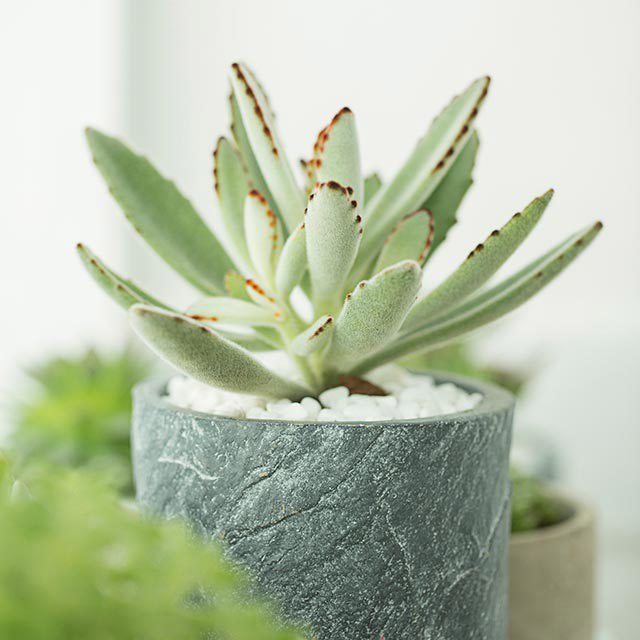
Why does your Kalanchoe tomentosa have white powder? Diagnose the cause and fix it with our step-by-step guide.
This fungal pathogen thrives in high humidity and poor air circulation around the fuzzy leaves of Kalanchoe. It creates a visible white, flour-like coating on the leaf surfaces, which can eventually lead to leaf necrosis.
These small insects secrete a white, waxy, cottony substance to protect themselves as they feed on the plant's sap. In Kalanchoe tomentosa, they often hide deep within the dense, velvety trichomes (hairs) of the leaves.
Excessive salts or minerals from tap water and fertilizers can crystallize on the surface of the leaves, especially if water evaporates off the fuzzy foliage. This creates a white, crusty residue that is not biological in nature.
Kalanchoe tomentosa is covered in dense, fine hairs called trichomes. Under certain lighting conditions or if the plant is slightly dehydrated, these hairs can catch the light and appear as a silvery or white 'dusty' coating.
Your plant might also be experiencing one of these issues:

 English
 Italiano