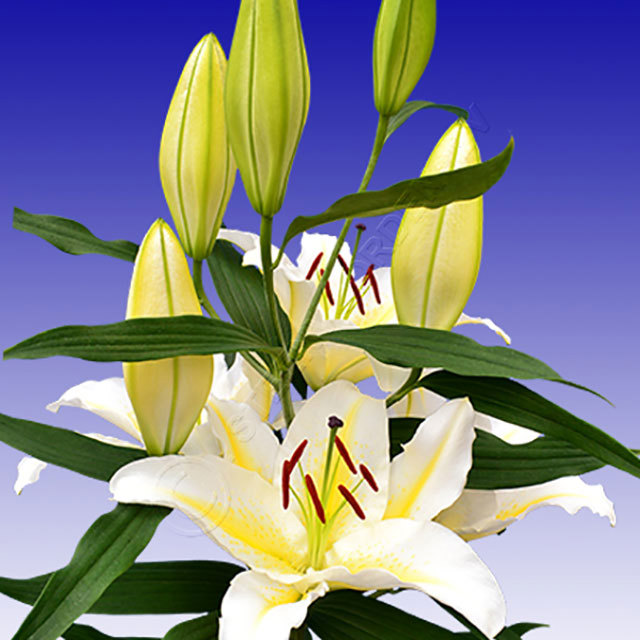
Why does your Lilium orientalis Columbia have drooping leaves? Diagnose the cause and fix it with our step-by-step guide.
This fungal pathogen specifically targets Oriental lilies, causing leaves to wilt and droop, often accompanied by brown spots or water-soaked lesions. High humidity and poor air circulation around the 'White Elephant' foliage promote spore germination.
Lilium orientalis requires consistent moisture but is highly susceptible to bulb rot if the soil stays saturated. Drooping occurs when roots are either too dry to support turgor pressure or too damaged by anaerobic conditions to absorb water.
Small mites feeding on the lily's cellular contents can cause a loss of turgidity in the leaves, leading to visible drooping. This is particularly common in warm, dry microclimates where these pests thrive.
A lack of essential macronutrients prevents the plant from maintaining structural integrity in its large, lush foliage. This often manifests as a general loss of vigor and drooping of older leaves.
Your plant might also be experiencing one of these issues:

 English
 Italiano