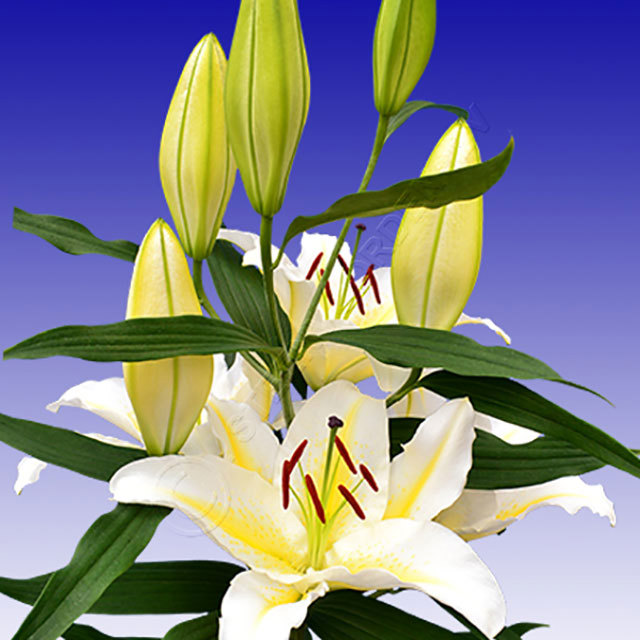
Why does your Lilium orientalis Columbia have yellow leaves? Diagnose the cause and fix it with our step-by-step guide.
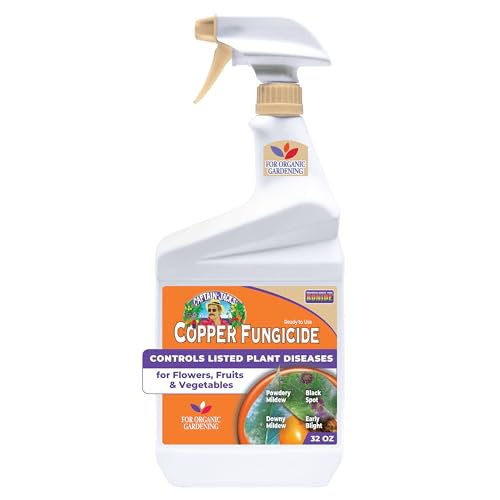
This fungal pathogen thrives in the humid environments often preferred by Oriental lilies, causing chlorosis (yellowing) followed by necrotic brown spots. It typically attacks leaves during cool, wet periods.
Oriental lilies are susceptible to bulb rot if the soil remains saturated. Excess moisture prevents oxygen from reaching the roots, causing the leaves to lose chlorophyll and turn yellow starting from the bottom.
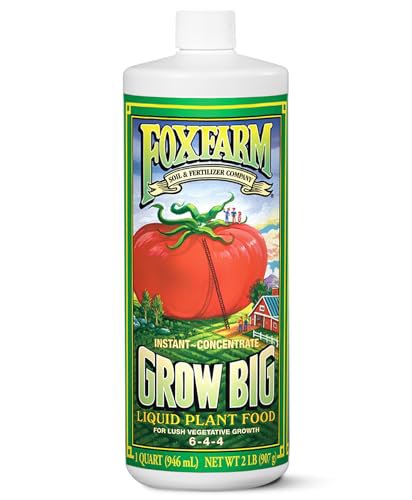
Lilium orientalis requires significant nutrients to support its large blooms; a lack of nitrogen prevents the production of chlorophyll. This manifests as a uniform yellowing of older, lower leaves first.
Extreme temperature fluctuations can cause physiological stress in White Elephant lilies. Sudden drops in temperature during the growing season can trigger a breakdown of chlorophyll in the foliage.
Your plant might also be experiencing one of these issues:

 English
 Italiano