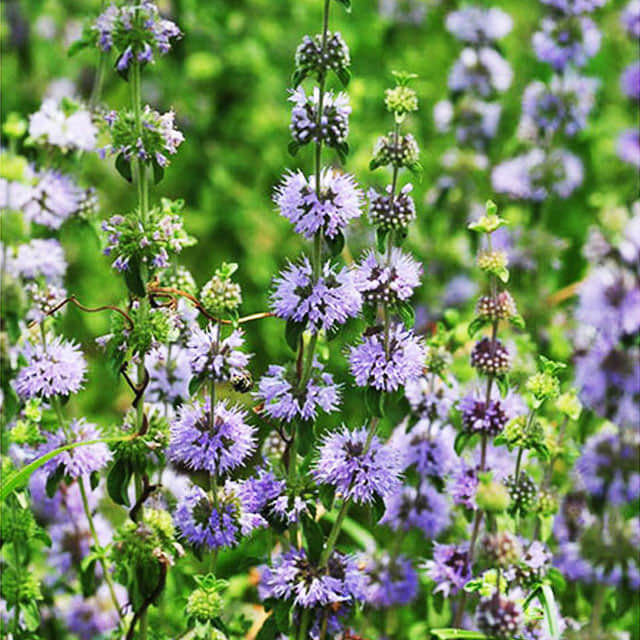
Mentha pulegium Brown Leaf Tips
eco Brown Leaf Tips

Mentha pulegium – Brown Leaf Tips

Why does your Mentha pulegium have brown leaf tips? Diagnose the cause and fix it with our step-by-step guide.

search Possible Causes

error

Salt Accumulation (Fertilizer Burn)

Pennyroyal is sensitive to high concentrations of mineral salts in the soil. When fertilizers accumulate, they draw moisture out of the leaf margins via osmosis, causing the tips to desiccate and turn brown.

Very Common
lightbulb
How to confirm: Check if you have recently applied a high-nitrogen fertilizer or if there is white crusty buildup on the soil surface.
build How to fix it
shopping_cart Recommended Products
1 Flush the soil thoroughly with large amounts of fresh, distilled, or demineralized water to leach out the accumulated mineral salts.
2 Repot the plant in fresh, high-quality potting soil to provide a clean environment free of salt buildup.
3 Use a soil moisture meter to monitor watering levels and prevent future over-fertilization or salt-inducing dehydration.
error

Inconsistent Soil Moisture

As a member of the Lamiaceae family, Pennyroyal prefers consistently moist soil. Allowing the root ball to dry out completely before watering causes hydraulic failure at the furthest points of the leaf, resulting in brown tips.

Very Common
lightbulb
How to confirm: Stick your finger an inch into the soil to see if it feels bone-dry compared to the usual damp state.
build How to fix it
shopping_cart Recommended Products
1 Monitor soil moisture levels closely using an analog meter to ensure the soil remains consistently damp without becoming waterlogged.
2 Implement a more regular watering schedule to prevent the root ball from drying out completely.
3 Consider using a self-watering system or moisture-retaining amendments like vermiculite to stabilize hydration levels.
warning

Low Humidity or Heat Stress

High temperatures combined with low ambient humidity increase the transpiration rate beyond what the roots can supply. This leads to rapid drying of the delicate leaf extremities in Mentha species.

Common
lightbulb
How to confirm: Observe if the browning coincides with a period of intense sunlight or hot, dry winds.
build How to fix it
shopping_cart Recommended Products
1 Increase ambient humidity around the plant by using a pebble tray or a fine misting spray bottle to prevent rapid transpiration.
2 Move the plant to a cooler location away from direct heat sources or hot windows to reduce heat stress.
3 Monitor soil moisture levels closely to ensure the roots can keep up with the plant's water needs during high temperatures.
warning

Water Quality (Chlorine/Fluoride Toxicity)

Pennyroyal can be sensitive to the chemical composition of tap water. Accumulation of chlorine or fluoride in the leaf tissues can cause necrotic spotting and tip browning.

Common
lightbulb
How to confirm: Try using filtered or rainwater for a few weeks to see if the progression of browning stops.
build How to fix it
shopping_cart Recommended Products
1 Switch to distilled, rainwater, or filtered water to prevent the accumulation of chlorine and fluoride in the plant tissue.
2 Allow tap water to sit uncovered for 24 hours before use to help chlorine dissipate through evaporation.
3 Monitor soil moisture levels closely to ensure you are not overcompensating for the brown tips with excessive watering.

Other Mentha pulegium problems

Your plant might also be experiencing one of these issues:

local_hospital All symptoms eco All plants with brown leaf tips
favorite