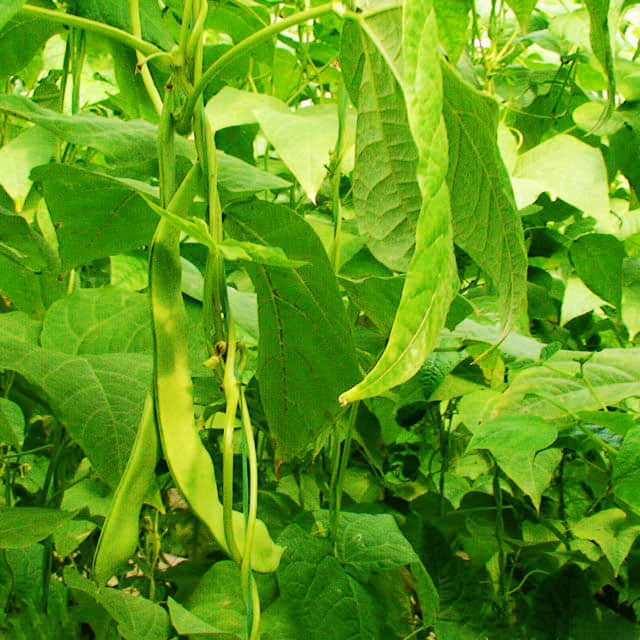
Why does your Phaseolus vulgaris have fine webbing? Diagnose the cause and fix it with our step-by-step guide.
Tetranychus urticae are common pests on bean crops that feed on the underside of leaves, secreting silk as they move and feed. The fine webbing is a hallmark sign of an established colony draining the plant's nutrients.
The larvae of certain moth species roll the edges of Phaseolus vulgaris leaves into tubes using silk webbing to create a protected microhabitat. This results in visible silken 'tunnels' or rolled leaf structures.
While not a direct cause of silk production, extremely dry conditions accelerate the lifecycle of spider mites and can cause fine, desiccated leaf fragments to stick together via residual plant exudates.
Your plant might also be experiencing one of these issues:

 English
 Italiano


