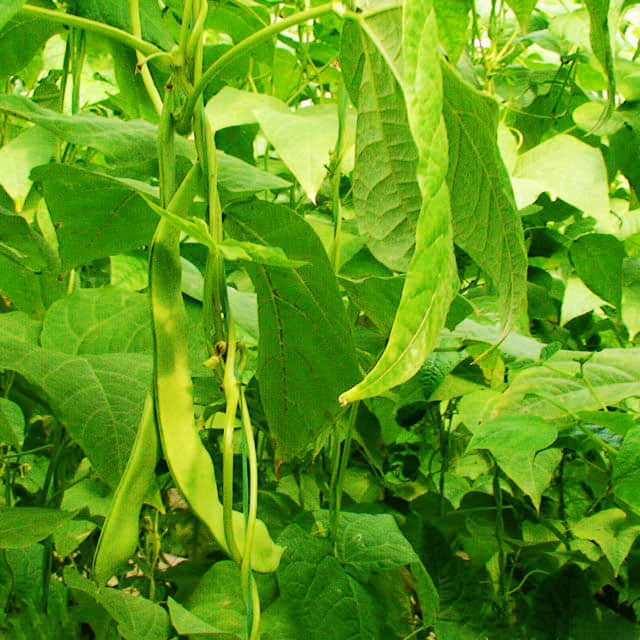
Phaseolus vulgaris Sudden Leaf Drop
eco Sudden Leaf Drop

Phaseolus vulgaris – Sudden Leaf Drop

Why does your Phaseolus vulgaris have sudden leaf drop? Diagnose the cause and fix it with our step-by-step guide.

search Possible Causes

error

Water Stress (Drought or Waterlogging)

Beans are highly sensitive to moisture fluctuations. Sudden leaf drop occurs when the plant enters survival mode due to extreme dehydration or, conversely, when roots suffocate from lack of oxygen in saturated soil.

Very Common
lightbulb
How to confirm: Check if the soil is bone-dry or if there is standing water around the base of the bean stem.
build How to fix it
shopping_cart Recommended Products
1 Check the soil moisture level immediately using a probe to determine if the soil is bone-dry or completely saturated.
2 If the soil is dry, water the plant thoroughly at the base; if waterlogged, ensure the pot has proper drainage and allow the soil to aerate.
3 To prevent future fluctuations, amend your potting mix with perlite to improve aeration and drainage.
error

Temperature Shock

Phaseolus vulgaris is a warm-season crop. Sudden drops in night temperatures (frost) or extreme heat waves can cause the plant to shed leaves to reduce transpiration surface area.

Very Common
lightbulb
How to confirm: Review recent weather logs for frost events or temperatures exceeding 35°C (95°F).
build How to fix it
shopping_cart Recommended Products
1 Protect the plant from further temperature fluctuations by using a frost cloth or moving container plants to a sheltered area.
2 Maintain consistent soil moisture to reduce plant stress during heat or cold waves; use a moisture meter to ensure the soil does not dry out completely.
3 Apply a liquid seaweed fertilizer to help the plant recover from environmental stress and boost nutrient uptake.
warning

Fusarium Wilt (Fusarium oxysporum f. sp. phaseoli)

This soil-borne pathogen invades the vascular system, blocking water transport. This leads to rapid wilting and sudden abscission of lower leaves as the plant loses hydraulic pressure.

Common
lightbulb
How to confirm: Cut a small section of the stem near the base to see if there is internal brown discoloration in the vascular tissue.
build How to fix it
shopping_cart Recommended Products
1 Immediately remove and destroy the infected plant and any surrounding debris to prevent the soil-borne pathogen from spreading to healthy beans.
2 Sterilize all gardening tools, such as pruning shears, with alcohol to avoid cross-contamination between plants.
3 Avoid planting beans in this soil for at least two to three years, and consider amending the area with organic matter like worm castings to improve soil health.
warning

Nutrient Deficiency (Nitrogen)

Severe nitrogen deficiency forces the plant to remobilize nutrients from older leaves to support new growth, often resulting in yellowing (chlorosis) followed by leaf drop.

Common
lightbulb
How to confirm: Observe if the oldest leaves at the bottom of the plant are turning pale yellow before dropping.
build How to fix it
shopping_cart Recommended Products
1 Apply a nitrogen-rich organic fertilizer to replenish the soil nutrients and stop the mobilization of nutrients from older leaves.
2 Check the soil moisture levels using a moisture meter to ensure the plant is not also experiencing water stress, which can exacerbate leaf drop.
3 Ensure the plant is receiving adequate sunlight, as insufficient light can hinder the plant's ability to utilize available nitrogen.

Other Phaseolus vulgaris problems

Your plant might also be experiencing one of these issues:

local_hospital All symptoms eco All plants with sudden leaf drop
favorite