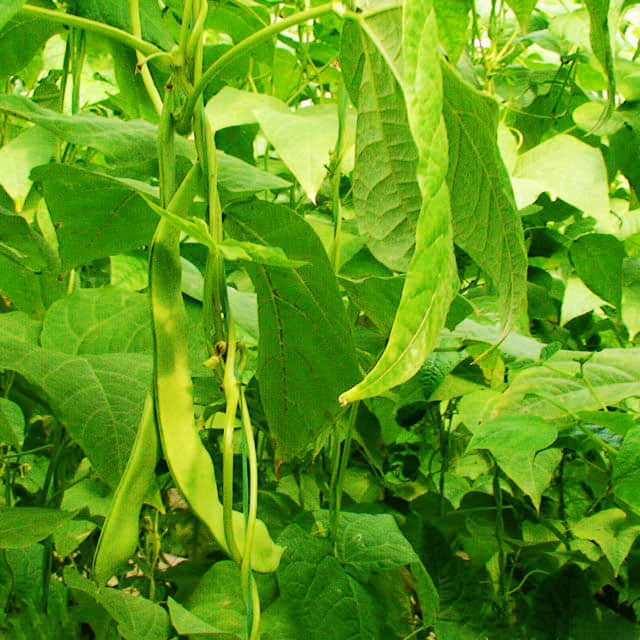
Why does your Phaseolus vulgaris have white cottony spots? Diagnose the cause and fix it with our step-by-step guide.
This fungal pathogen causes irregular white, cottony mycelium to grow on stems and pods, often leading to rapid stem decay. It thrives in cool, high-humidity environments common during the flowering stage of beans.
A common fungal disease in Phaseolus vulgaris that manifests as white, flour-like patches on the surface of leaves. While it may not kill the plant immediately, it reduces photosynthetic capacity and can cause premature leaf drop.
Certain aphid species or their honeydew excretion can attract sooty mold, creating a fuzzy appearance. Additionally, some pests may leave behind white, waxy secretions that resemble cotton.
Your plant might also be experiencing one of these issues:

 English
 Italiano

