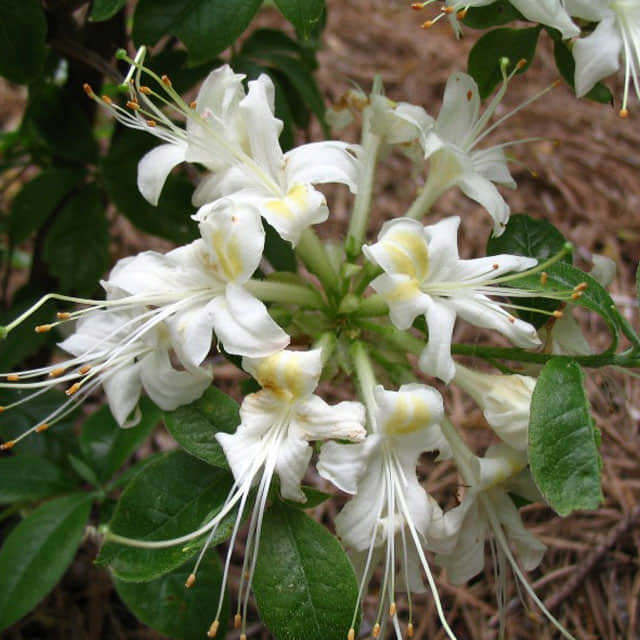
Rhododendron alabamense Fine Webbing
eco Fine Webbing

Rhododendron alabamense – Fine Webbing

Why does your Rhododendron alabamense have fine webbing? Diagnose the cause and fix it with our step-by-step guide.

search Possible Causes

error

Two-Spotted Spider Mite (Tetranychus urticae)

These tiny arachnids pierce the cell walls of Alabama Azalea leaves to suck out nutrients, leaving behind fine silk webbing and stippling. They thrive in the hot, dry conditions that often affect Rhododendron species during summer.

Very Common
lightbulb
How to confirm: Gently tap a leaf over a white piece of paper to see if tiny crawling dots fall off.
build How to fix it
shopping_cart Recommended Products
1 Apply an organic insecticide spray to the plant to eliminate existing spider mites, eggs, and larvae.
2 Increase humidity around the plant and avoid hot, dry air, as spider mites thrive in arid conditions.
3 Gently wipe the leaves with a damp cloth to physically remove webbing and dislodge any remaining mites.
warning

Southern Yellowhouse Spider Mite

Similar to the two-spotted variety, these mites create fine webs on the undersides of leaves, causing the azalea foliage to look dull and bronze.

Common
lightbulb
How to confirm: Inspect the undersides of the leaves specifically for small, yellowish spots or clusters of eggs.
build How to fix it
shopping_cart Recommended Products
1 Apply an organic miticide or insecticide spray to the undersides of the leaves to eliminate the spider mites and their webs.
2 Prune and dispose of heavily infested or dead foliage to prevent the mites from spreading to healthy parts of the plant.
3 Increase humidity around the plant, as spider mites thrive in dry conditions; consider using a fine mist spray.
warning

Ascochyta Blight (Early Stage)

While typically characterized by lesions, extreme moisture and high humidity can lead to fungal growth that may appear as fine, fuzzy mycelium resembling webbing.

Common
lightbulb
How to confirm: Check if the 'webbing' is actually accompanied by dark, sunken necrotic spots on the leaf tissue.
build How to fix it
shopping_cart Recommended Products
1 Apply a fungicide to control the early fungal growth and prevent the spread of blight lesions.
2 Reduce humidity and improve air circulation around the plant to prevent moisture-driven fungal development.
3 Prune and dispose of any heavily affected foliage to remove the source of infection from the plant.

Other Rhododendron alabamense problems

Your plant might also be experiencing one of these issues:

local_hospital All symptoms eco All plants with fine webbing
favorite



