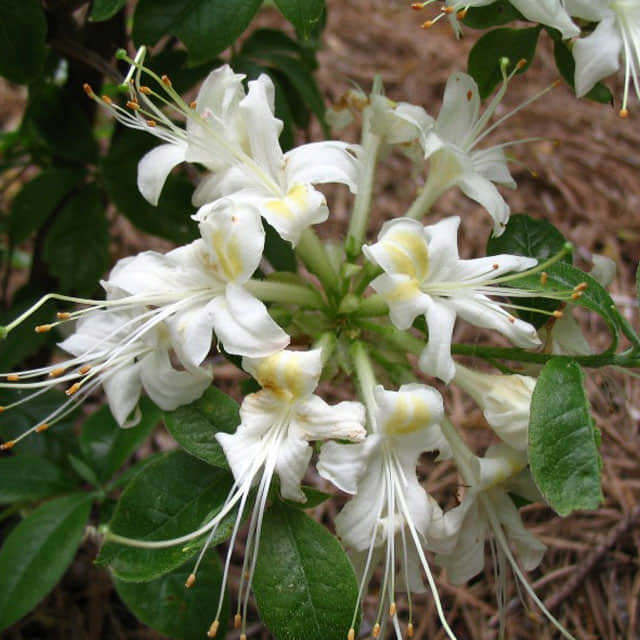
Why does your Rhododendron alabamense have sudden leaf drop? Diagnose the cause and fix it with our step-by-step guide.
Alabama Azaleas have shallow root systems that are highly sensitive to moisture fluctuations. Sudden leaf drop is a common physiological response to soil becoming bone-dry or, conversely, waterlogged conditions that cause root asphyxiation.
This fungal pathogen thrives in poorly draining soils and attacks the fine feeder roots of Rhododendrons. As the root system fails, the plant can no longer support its foliage, leading to rapid defoliation.
Rhododendron alabamense is susceptible to rapid changes in temperature, especially sudden late frosts in spring or extreme heatwaves. Sudden drops in temperature can cause cells in the leaves to rupture, triggering a defense mechanism of leaf shedding.
While nutrient deficiency is usually gradual, a severe lack of nitrogen can cause the plant to shed older leaves to preserve core functions. This often presents with chlorosis (yellowing) before the actual drop occurs.
Your plant might also be experiencing one of these issues:

 English
 Italiano