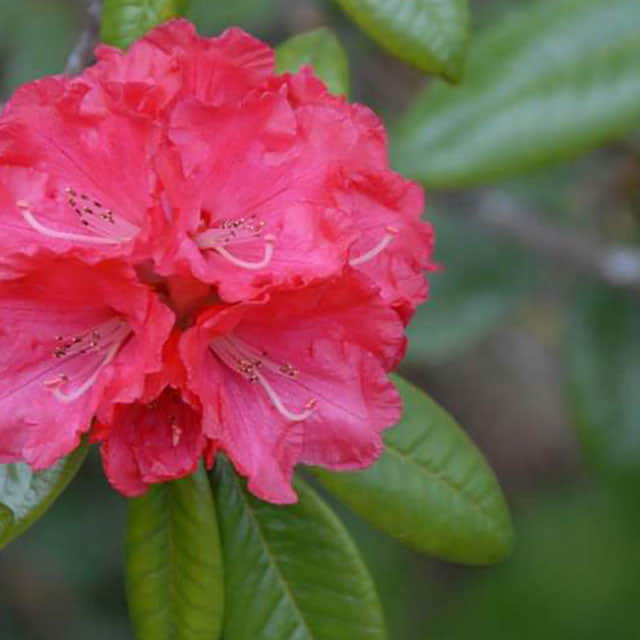
Rhododendron arboreum Sticky Leaves
eco Sticky Leaves

Rhododendron arboreum – Sticky Leaves

Why does your Rhododendron arboreum have sticky leaves? Diagnose the cause and fix it with our step-by-step guide.

search Possible Causes

error

Scale Insects

Scale insects attach themselves to the stems and leaf undersides of Rhododendron arboreum, secreting honeydew (a sticky sugar-rich substance) as they feed on plant sap.

Very Common
lightbulb
How to confirm: Inspect the undersides of leaves and woody stems for small, immobile bumps or shell-like growths.
build How to fix it
shopping_cart Recommended Products
1 Apply an organic insecticide spray to the plant to eliminate existing scale insects and their eggs.
2 Thoroughly wipe the leaves and stems with a damp cloth to remove the sticky honeydew residue and prevent fungal growth.
3 Prune away heavily infested stems to reduce the insect population and prevent further spread to healthy parts of the tree.
error

Aphid Infestation

Aphids are soft-bodied insects that congregate on new growth and flower buds of the tree rhododendron, excreting large amounts of sticky honeydew.

Very Common
lightbulb
How to confirm: Look for tiny, pear-shaped insects clustered on tender new shoots or leaf edges.
build How to fix it
shopping_cart Recommended Products
1 Apply an organic insecticide spray to the plant to eliminate the aphid population and stop the production of honeydew.
2 Gently wash the sticky leaves with a soft cloth or a gentle stream of water to remove the accumulated honeydew and prevent fungal growth.
3 Inspect new growth and flower buds regularly to ensure no new aphids are colonizing the plant.
warning

Sooty Mold

This is not a primary infection but a secondary fungus that grows on the sticky honeydew left behind by sucking insects, coating the leaves in a black, powdery residue.

Common
lightbulb
How to confirm: Check if the stickiness is accompanied by a dark, charcoal-colored film covering the leaf surface.
build How to fix it
shopping_cart Recommended Products
1 Identify and treat the underlying insect pests, such as aphids or scale, using an organic insecticide to stop the production of honeydew.
2 Gently wash the black, powdery residue off the leaves with a soft cloth or a gentle stream of water to restore photosynthesis.
3 Apply a fungicide spray to prevent the spread of the sooty mold fungus on the plant's foliage.
warning

Mealybugs

These insects produce a white, waxy coating and excrete honeydew that creates a sticky residue on the foliage of mature rhododendrons.

Common
lightbulb
How to confirm: Search for small, cottony white masses nestled in the leaf axils or where the leaf meets the stem.
build How to fix it
shopping_cart Recommended Products
1 Treat the plant with an organic insecticide to eliminate the mealybug population and remove the white, waxy coating.
2 Wipe the sticky residue off the leaves using a soft cloth dampened with water or insecticidal soap to prevent fungal growth.
3 Inspect the undersides of leaves and crevices for any remaining pests to prevent a secondary infestation.

Other Rhododendron arboreum problems

Your plant might also be experiencing one of these issues:

local_hospital All symptoms eco All plants with sticky leaves
favorite