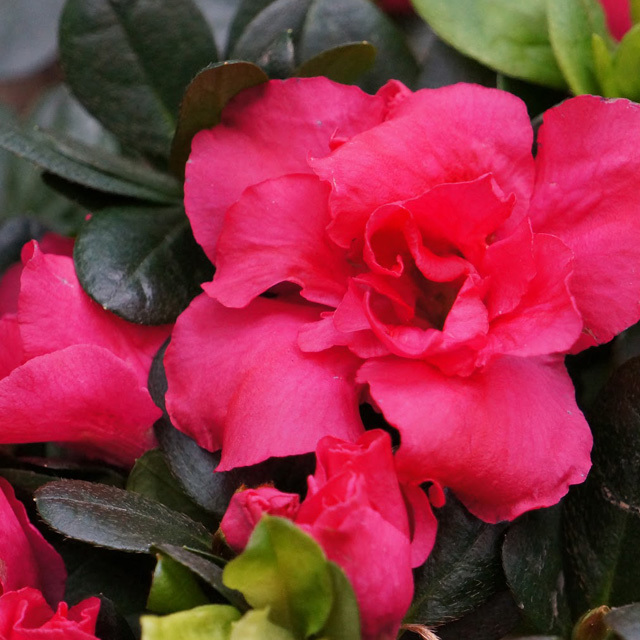
Rhododendron hybridum hot Yellow Leaves
eco Yellow Leaves

Rhododendron hybridum hot – Yellow Leaves

Why does your Rhododendron hybridum hot have yellow leaves? Diagnose the cause and fix it with our step-by-step guide.

search Possible Causes

error

Iron Chlorosis (Nutrient Deficiency)

Rhododendrons are acid-loving plants; if the soil pH rises above 5.5, iron becomes chemically unavailable to the roots, causing interveinal chlorosis where veins remain green but leaf tissue turns yellow.

Very Common
lightbulb
How to confirm: Check if the new growth is yellowing while the leaf veins remain distinctively dark green.
build How to fix it
shopping_cart Recommended Products
1 Lower the soil pH to an acidic level (between 4.5 and 5.5) to ensure iron remains chemically available to the roots.
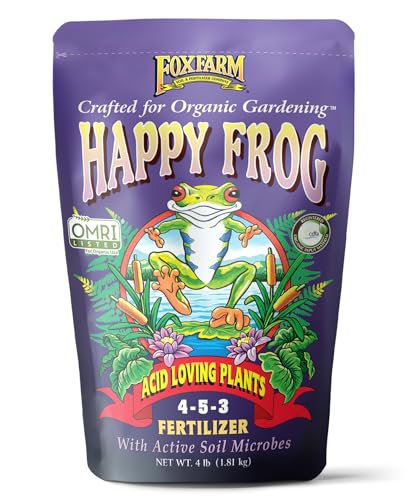
2 Apply an acid-loving plant fertilizer to provide the necessary nutrients for recovery.
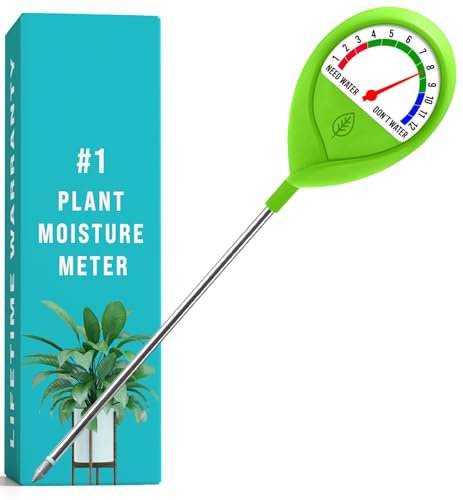
3 Monitor soil moisture levels using a moisture meter to prevent the soil from drying out too much, which can exacerbate nutrient lockout.
error

Overwatering and Root Rot

Excessive moisture in heavy soil deprives roots of oxygen, leading to Phytophthora or Pythium infections which impair the plant's ability to transport nutrients.

Very Common
lightbulb
How to confirm: Inspect the base of the stems for dark, mushy tissue and feel if the soil remains saturated for long periods.
build How to fix it
shopping_cart Recommended Products
1 Immediately stop watering and allow the soil to dry out significantly to restore oxygen to the root zone.
2 Repot the plant in a well-draining, acidic medium and consider adding perlite to improve aeration and prevent future waterlogging.
3 Prune away any mushy, blackened, or dead roots using sterilized tools to prevent the spread of rot.
warning

Nitrogen Deficiency

A lack of nitrogen prevents the synthesis of chlorophyll, typically resulting in a more uniform yellowing that starts with older, lower leaves first.

Common
lightbulb
How to confirm: Observe if the yellowing is progressing from the oldest leaves upward toward the new growth.
build How to fix it
shopping_cart Recommended Products
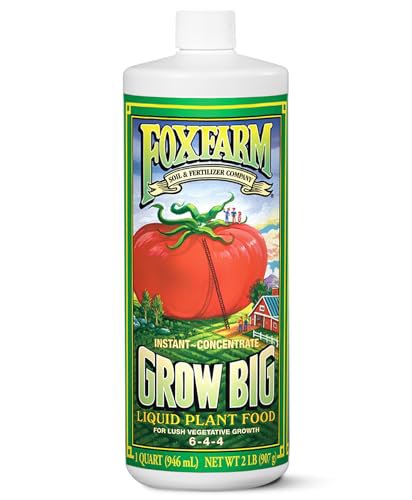
1 Apply a nitrogen-rich organic fertilizer to boost chlorophyll production and green up the foliage.
2 Ensure the soil remains at a slightly acidic pH to prevent nutrient lockout, as Rhododendrons are acid-loving plants.
3 Monitor soil moisture levels with a meter to ensure consistent hydration, preventing nitrogen from leaching out of the root zone.
warning

Salt Accumulation

High levels of salts from hard water or excessive synthetic fertilizers can burn the sensitive root system of Rhododendrons, leading to leaf yellowing and tip necrosis.

Common
lightbulb
How to confirm: Check for a white, crusty residue on the soil surface or the edges of the planting container.
build How to fix it
shopping_cart Recommended Products
1 Flush the soil thoroughly with large amounts of distilled or rainwater to leach out accumulated mineral salts from the root zone.
2 Check the soil moisture levels regularly using a moisture meter to ensure you are not overwatering, which can exacerbate nutrient imbalances.
3 Switch to an acid-loving specific fertilizer and avoid high-salt synthetic options to prevent further buildup.

Other Rhododendron hybridum hot problems

Your plant might also be experiencing one of these issues:

local_hospital All symptoms eco All plants with yellow leaves
favorite