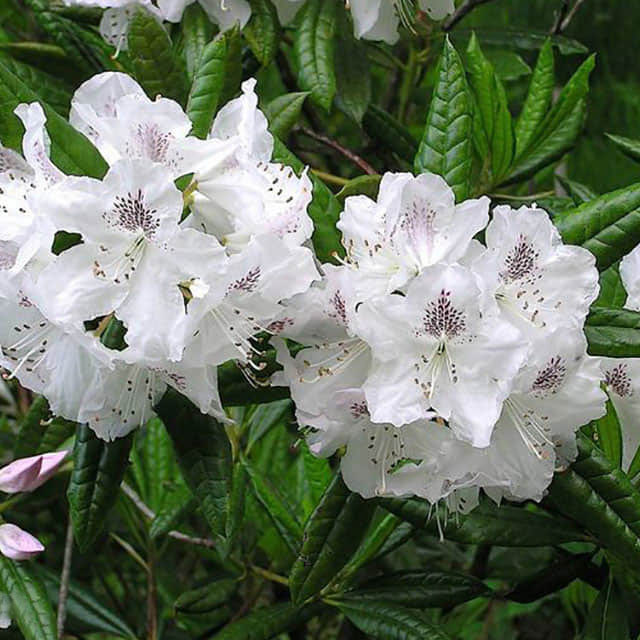
Why does your Rhododendron prunifolium have drooping leaves? Diagnose the cause and fix it with our step-by-step guide.
As an acid-loving species with shallow root systems, Rhododendron prunifolium is highly sensitive to soil moisture fluctuations. Drought causes loss of turgor pressure leading to drooping, while overwatering leads to Phytophthora root rot, which prevents water uptake.
Excessive moisture in heavy soils can trigger Phytophthora species, which decay the fine feeder roots of this azalea. This damage prevents the plant from transporting water to the leaves, resulting in permanent wilting or drooping.
Plum-leaf Azaleas can suffer from rapid transpiration during sudden heat waves, especially if the plant is in a sunny spot. The leaves droop as a physiological mechanism to reduce surface area exposed to intense sunlight.
In alkaline soils, this species cannot uptake iron efficiently. While chlorosis (yellowing) is a primary symptom, severe deficiency can lead to weakened cellular structure and leaf drooping.
Your plant might also be experiencing one of these issues:

 English
 Italiano