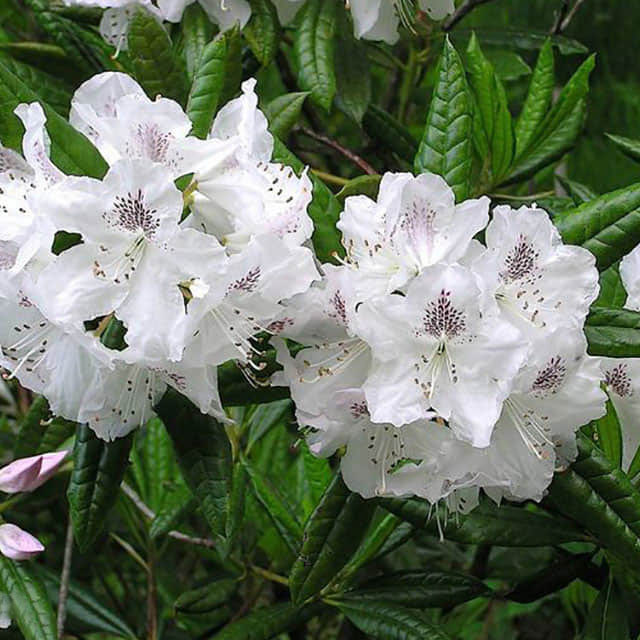
Why does your Rhododendron prunifolium have white cottony spots? Diagnose the cause and fix it with our step-by-step guide.
These small insects secrete a white, waxy, cottony substance to protect themselves while feeding on the sap of the Plum-leaf Azalea. They often congregate in the crevices between leaf petioles and on new growth.
Similar to mealybugs, scale insects produce a white, fluffy coating that can appear as cottony spots on the stems and leaf undersides. They attach themselves firmly to the plant tissue to suck nutrients.
While usually appearing as a fine white dust, severe infections can clump together to look like fuzzy patches on the leaf surface. This fungus thrives in high humidity and poor air circulation around the foliage.
These aphids produce a white, filamentous wax that gives the plant parts a 'woolly' appearance. They specifically target the tender new shoots of Rhododendron species during the growing season.
Your plant might also be experiencing one of these issues:

 English
 Italiano