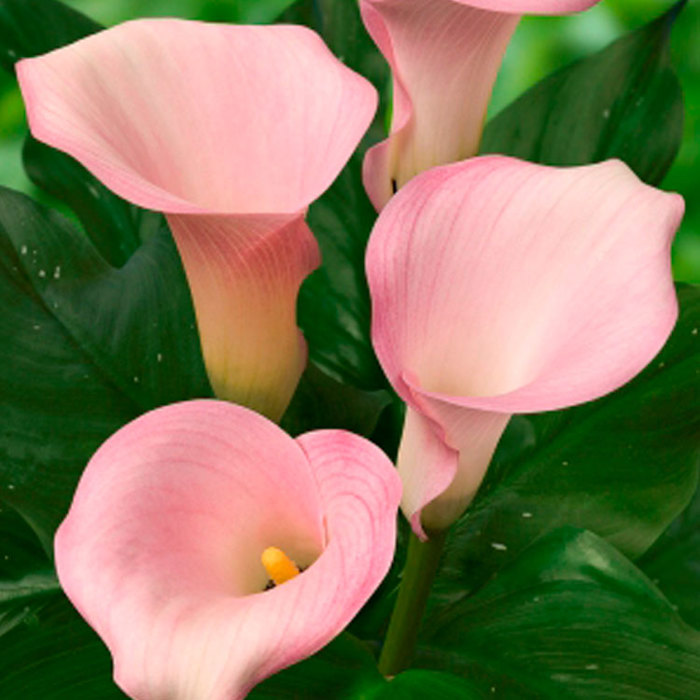
Why does your Zantedeschia Captain Melrose have fine webbing? Diagnose the cause and fix it with our step-by-step guide.
Spider mites thrive in the warm, dry conditions often found around Calla Lilies. They pierce plant cells to suck sap, leaving behind fine silk webbing as they build colonies on the undersides of leaves.
While not producing silk, extreme dryness can cause certain leaf edges to fray or split, which can sometimes be visually mistaken for fine webbing in low light. Zantedeschia species prefer consistent moisture and higher humidity.
In some regions, certain moth larvae can produce silk-like strands as they move through the foliage or near the base of the bulb. This is less common than spider mites but results in similar visual disturbances.
Your plant might also be experiencing one of these issues:

 English
 Italiano